


Too early for damage, old enough for signals
The padel court at Tennisclub Quirijn in Tilburg has been there for a few years. Long enough to see what a coating does in practice — and too short to expect damage. We walked around it and looked at how the structure has held up so far.
The outcome is one you see more often: most of it is fine, but one component stands out. And that is exactly the component that could have been predicted upfront.
From a distance: not much going on
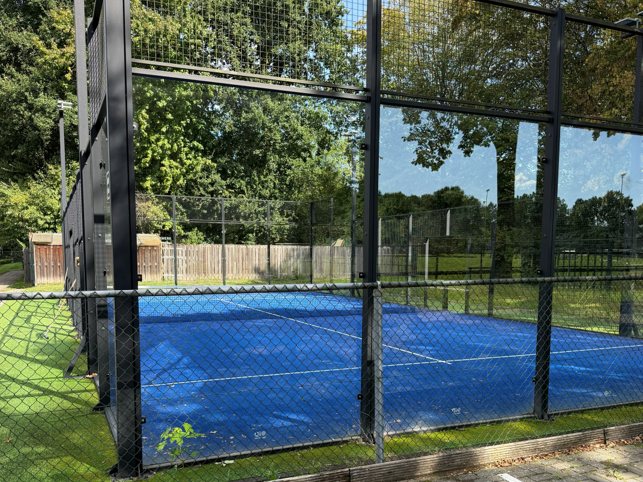
The cage structure itself shows no serious signs of degradation. It is clear, however, that little maintenance takes place: there is algae growth, and sand and leaves are piling up along the bottom edge.
That is not a cosmetic detail. Dirt retains moisture, and moisture plus dirt is a corrosive environment that sits permanently against the coating. It shortens the service life, even if you cannot see anything yet.
Contamination: a load nobody plans for
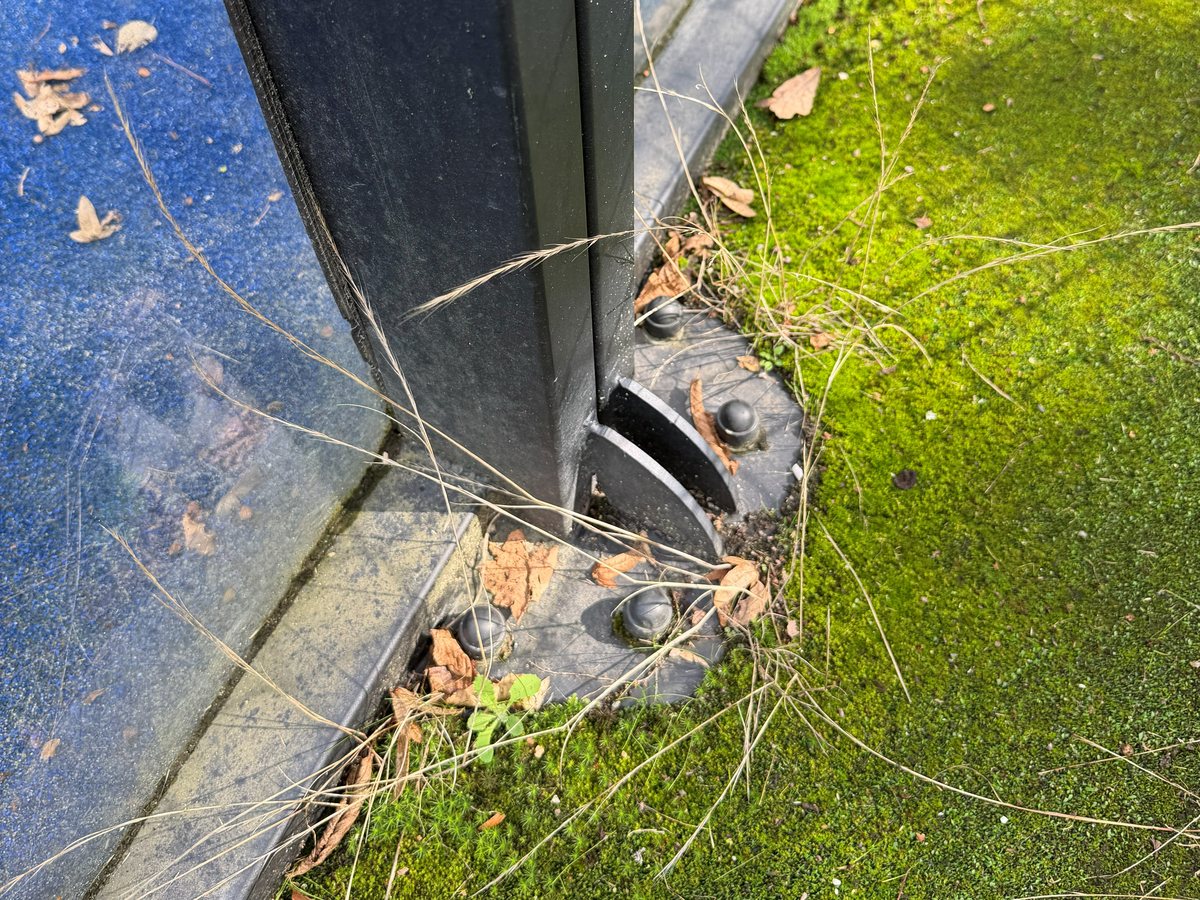
Algae growth is clearly visible on the coating, along with a build-up of sand and leaves. The structure is not cleaned periodically.
In itself that is not damage. It is, however, an environment that puts a permanent load on the coating, and one that should have been factored into the expected service life.
Water pooling: the risk that has not yet materialized
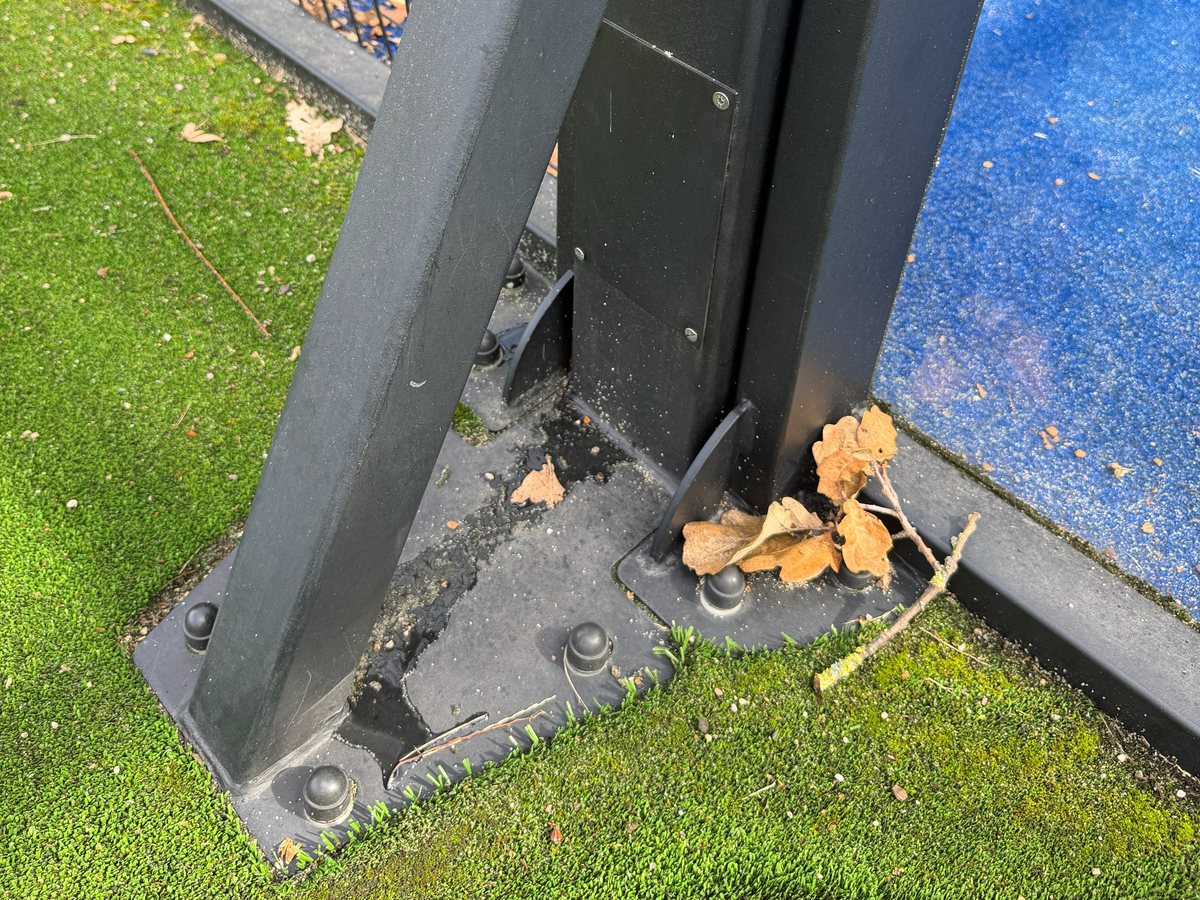
Because of the way the base plates are constructed, rainwater does not drain away easily. Combined with the contamination, that means an increased risk of coating failure.
Here it has not yet led to damage. It is, however, exactly the kind of construction detail that belongs in a specification and is rarely in it.
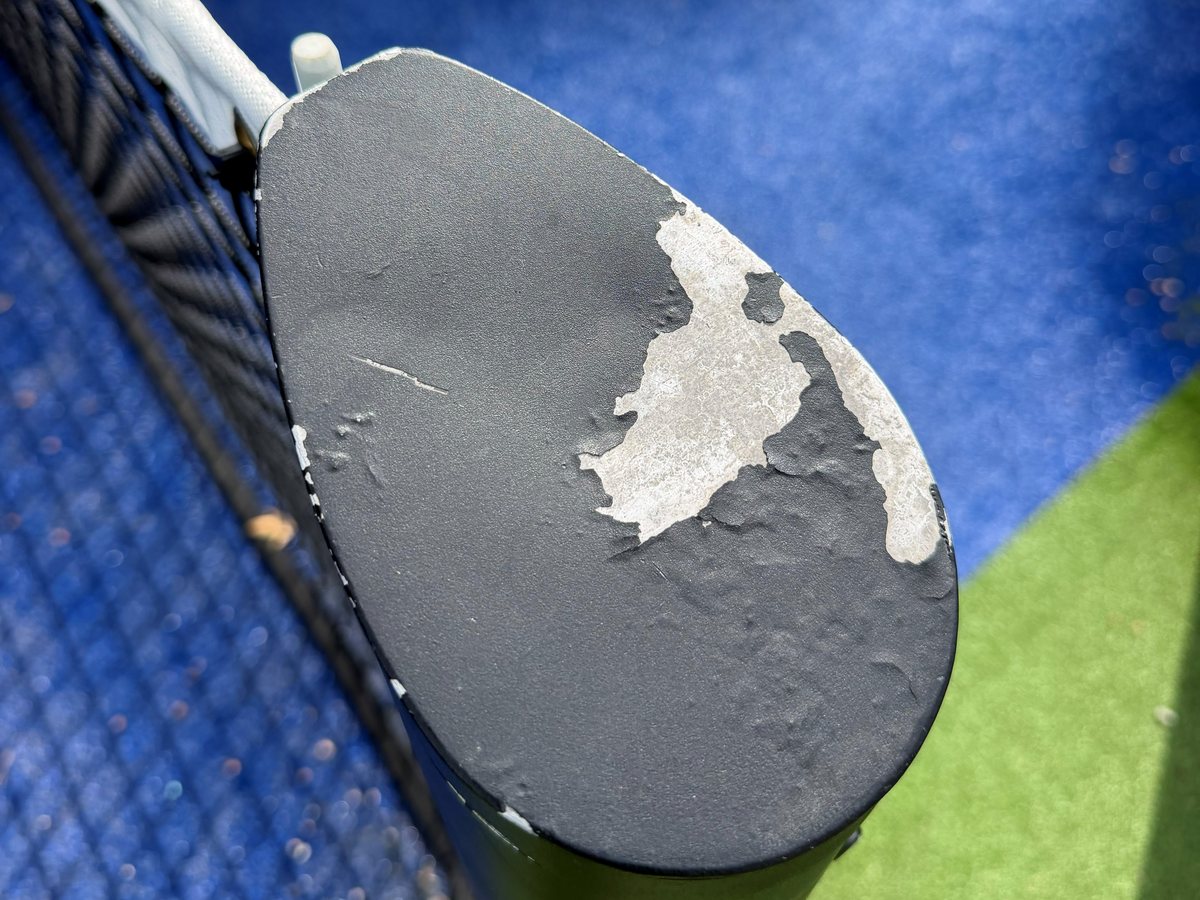
Where it did go wrong: the cover plates
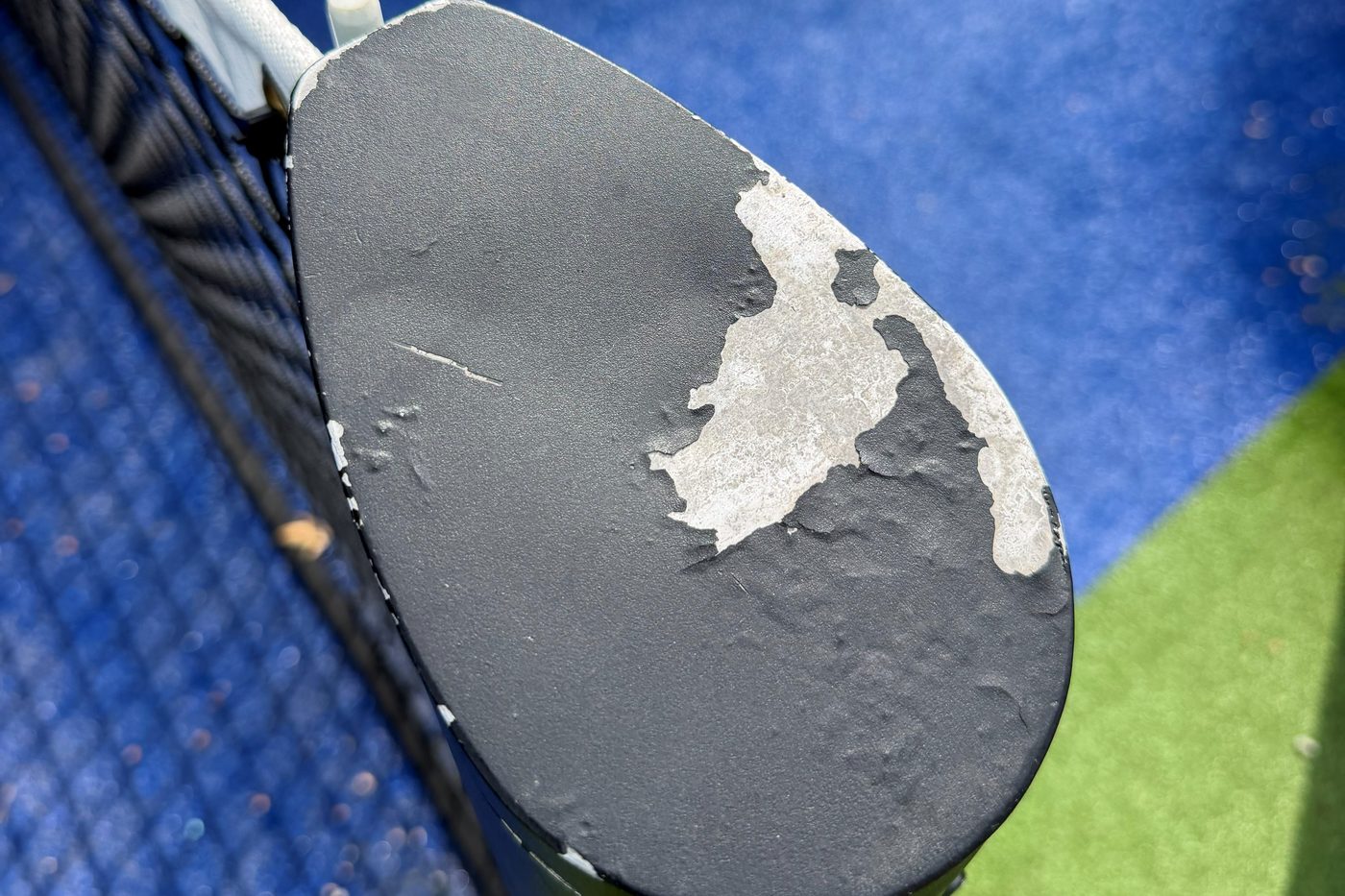
The net posts are sealed at the top with powder-coated cover plates made of cast aluminum. There the coating is literally flaking off. Large areas have delaminated down to the bare metal.
This is no coincidence, nor a poorly applied layer. Cast aluminum is difficult to coat. For a reliable process you need to look at the alloy — how much copper it contains — and at the pretreatment. With too much copper the corrosion resistance is poor; with too little copper the casting process becomes difficult.
A middle ground has to be found, and that choice is made long before anyone sets foot on the court.
This could have been covered upfront
Delamination caused by outdoor exposure comes to light with a salt spray test according to ISO 9227. A single test on a representative part would have shown that this combination of material and process does not hold up.
Even more important is what comes before that. If it has been laid down upfront:
- which corrosivity category applies to the environment the product will be placed in;
- which performance requirement goes with it, and how it is demonstrated;
- which materials and pretreatment are permitted, especially for difficult substrates;
- who is responsible if the coating does not meet the requirement,
… then the outcome is no surprise and the discussion afterwards is unnecessary.
Why this goes wrong more often than you think
Here the damage is limited. The cover plates can be replaced separately and the rest of the structure is fine. Annoying, but manageable.
It becomes a different conversation when the same thing happens to a part that is built into a machine and has to be fully disassembled to be replaced. Then it is no longer about a plate costing a few tens of euros, but about downtime and disassembly hours. And then the question arises of who pays for it — usually years after delivery, exactly when coating defects show up and nobody remembers the agreements.
Coatings largely determine the eventual service life of a product. The question is whether that is as clear to your supplier as it is to you — and whether it is written down anywhere.


