


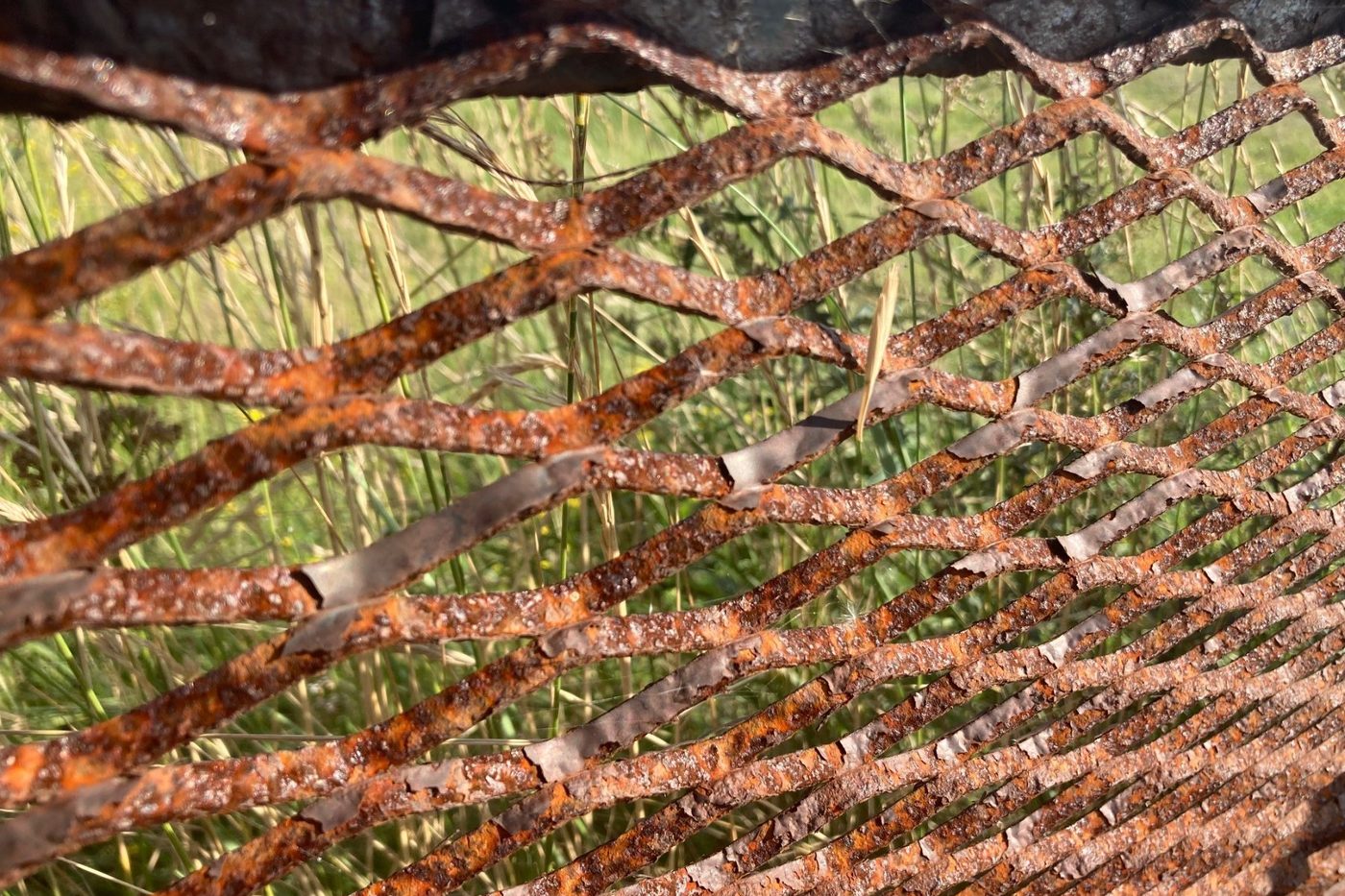
Coating expanded metal, an art in itself
Would the owner be happy with this? That is the question we ask ourselves about every product we come across. In this series we put the coating of a wide range of products, objects and structures under the microscope. This time: a balustrade next to a flight of steps in IJmuiden.
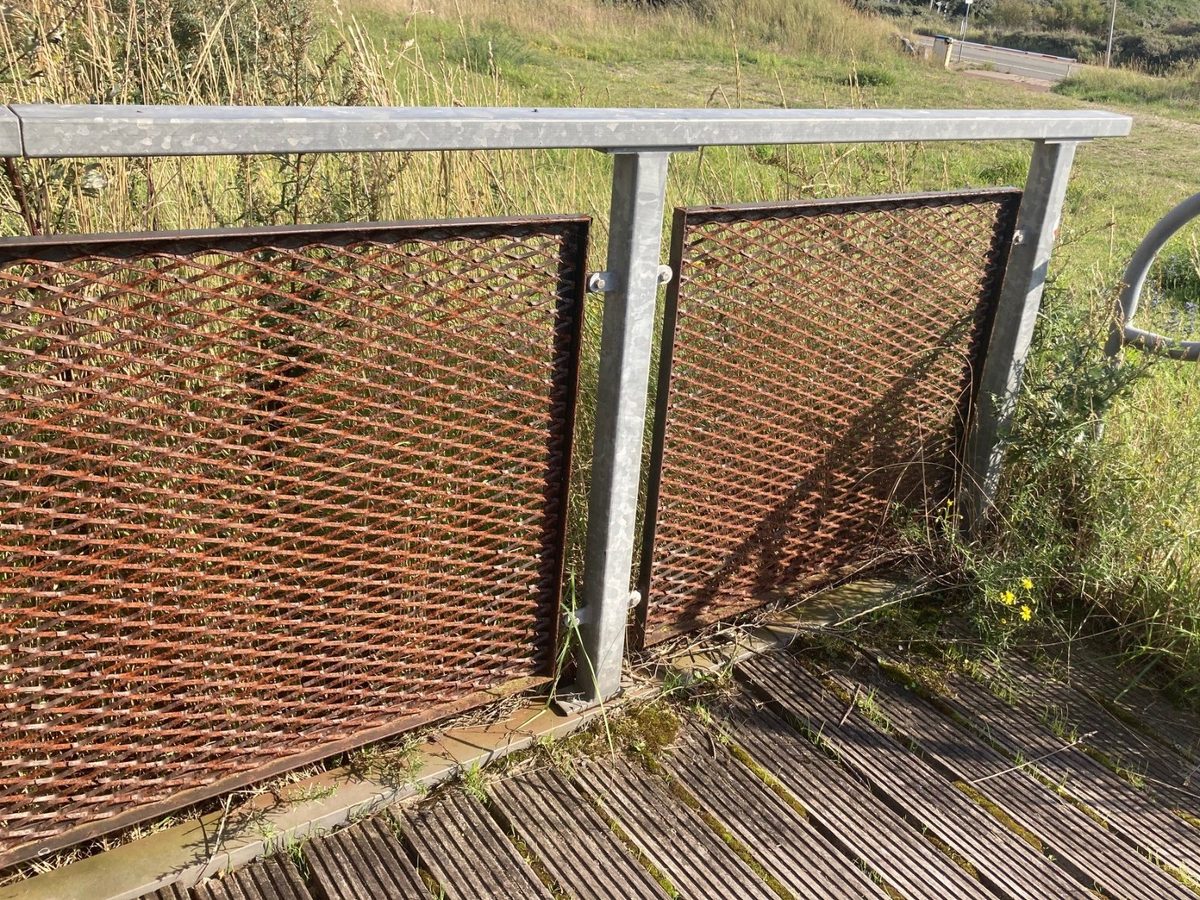
From a distance: an unsightly rusted balustrade
This balustrade next to a flight of steps in IJmuiden consists of a galvanised steel frame fitted with expanded metal infill panels. The infill panels have turned completely brown with rust. It really is an eyesore.
On closer inspection: the coating on the expanded metal has disappeared completely
Up close, the difference between the frame and the infill panels is striking. We found one point that is in order and one defect.
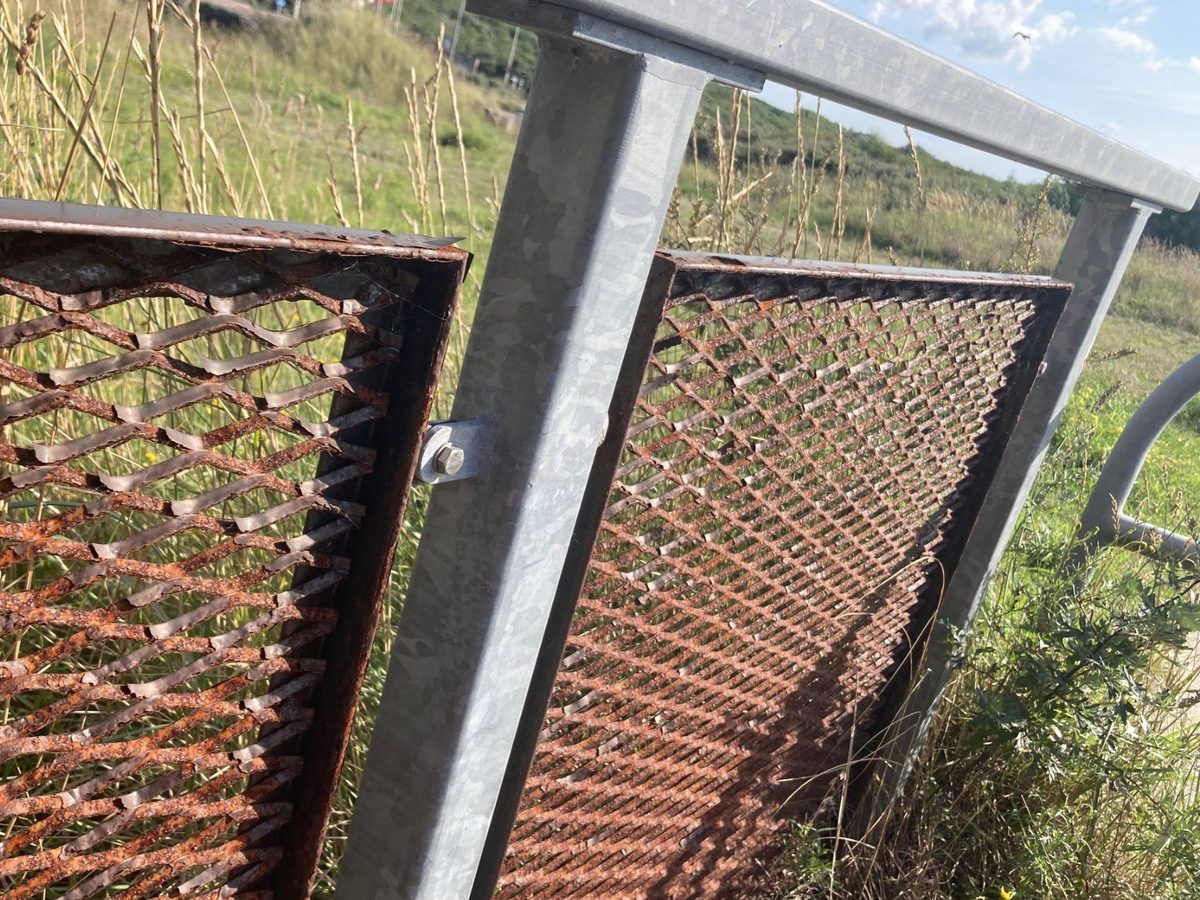
1. Galvanised frame in excellent condition (in order)
Observation: the frame is made of steel that was hot-dip galvanised after fabrication. As a result, it is still in excellent condition. Even without a (powder) coating on top, a frame like this withstands the marine climate for a long time.
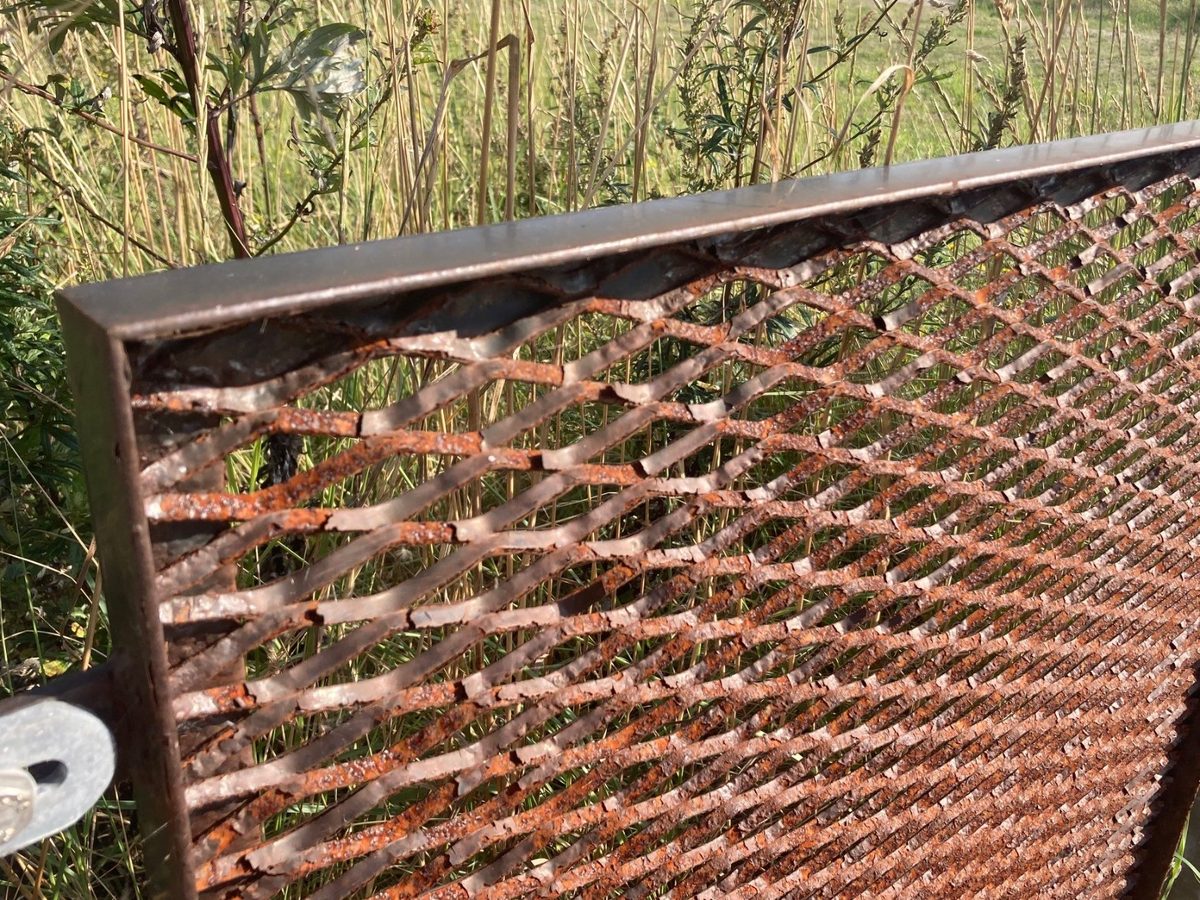
2. Coated expanded metal completely rusted (defect)
Observation: on the expanded metal itself the coating has flaked off completely and the steel is rusting. The surround of the expanded metal has also degraded severely.
Consequence: the corrosion of the expanded metal is above all very unsightly. Fortunately, the galvanised frame ensures that the structure remains functional and safe. The owner of the balustrade, the municipality, will not be happy with this, however.
Why is the expanded metal rusting, but not the frame?
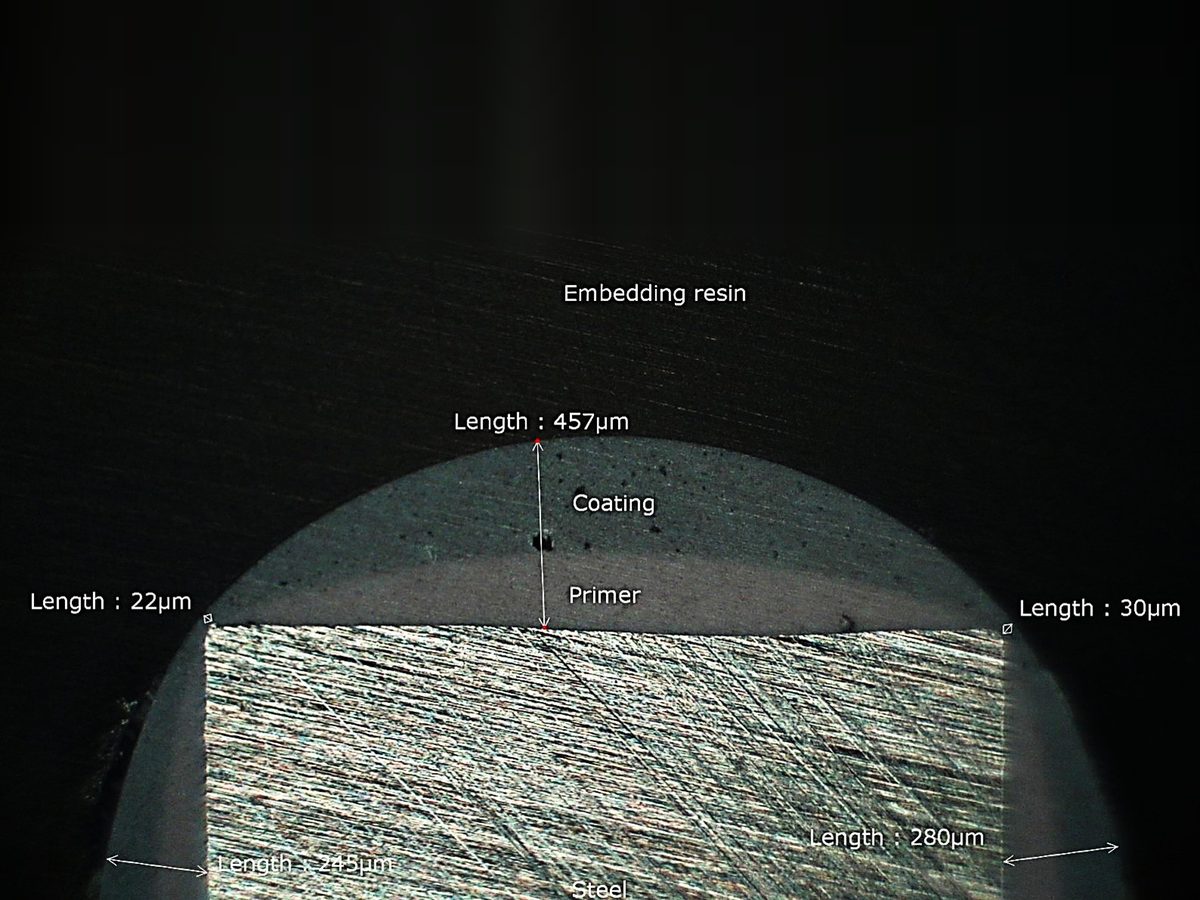
Cause: the steel of the infill panels was not galvanised before coating, even though this is essential in this environment. In addition, expanded metal has sharp edges. The coating stays thin on those edges, which makes a multi-coat application necessary. That did not happen here either.
The microscopic cross-section of a coated steel profile with primer and topcoat shows how big this effect is: 457 µm in the middle of the flat surface, but only 22 and 30 µm on the sharp corners. Note: even with two coats, galvanising remains essential in this environment!
Who pays for that?
The municipality is unlikely to accept this and will probably ask for repairs. The supplier should then put it right, depending of course on the agreed warranty period and the scope of the warranty.
Discussions like these often only start after years, at the moment coating defects become visible. And usually without clear agreements made beforehand.
How could this have been prevented?
With clear agreements beforehand, and a test that confirms them. So when purchasing structures like this, go through the following steps.
- Specify. Set out in a paint specification what the coating has to meet: environment, expected service life, adhesion, corrosion protection and so on. And share that specification with your supplier.
- Test. Verify your requirements by carrying out the tests listed in the paint specification. In this case a salt spray test to ISO 9227 would have brought the problem to light straight away.
- Verify. Carry out the test on the actual product, or part of it, not on test panels. Only then can you see whether the system performs as you expect.
That is how you avoid discussions about quality and cost afterwards.
The art of specifying
What does your purchasing specification say about the coating? Coatings largely determine the service life of a product. Is that as clear to your supplier as it is to you?
We help companies to clarify these expectations, record them professionally and verify that they are met.


