


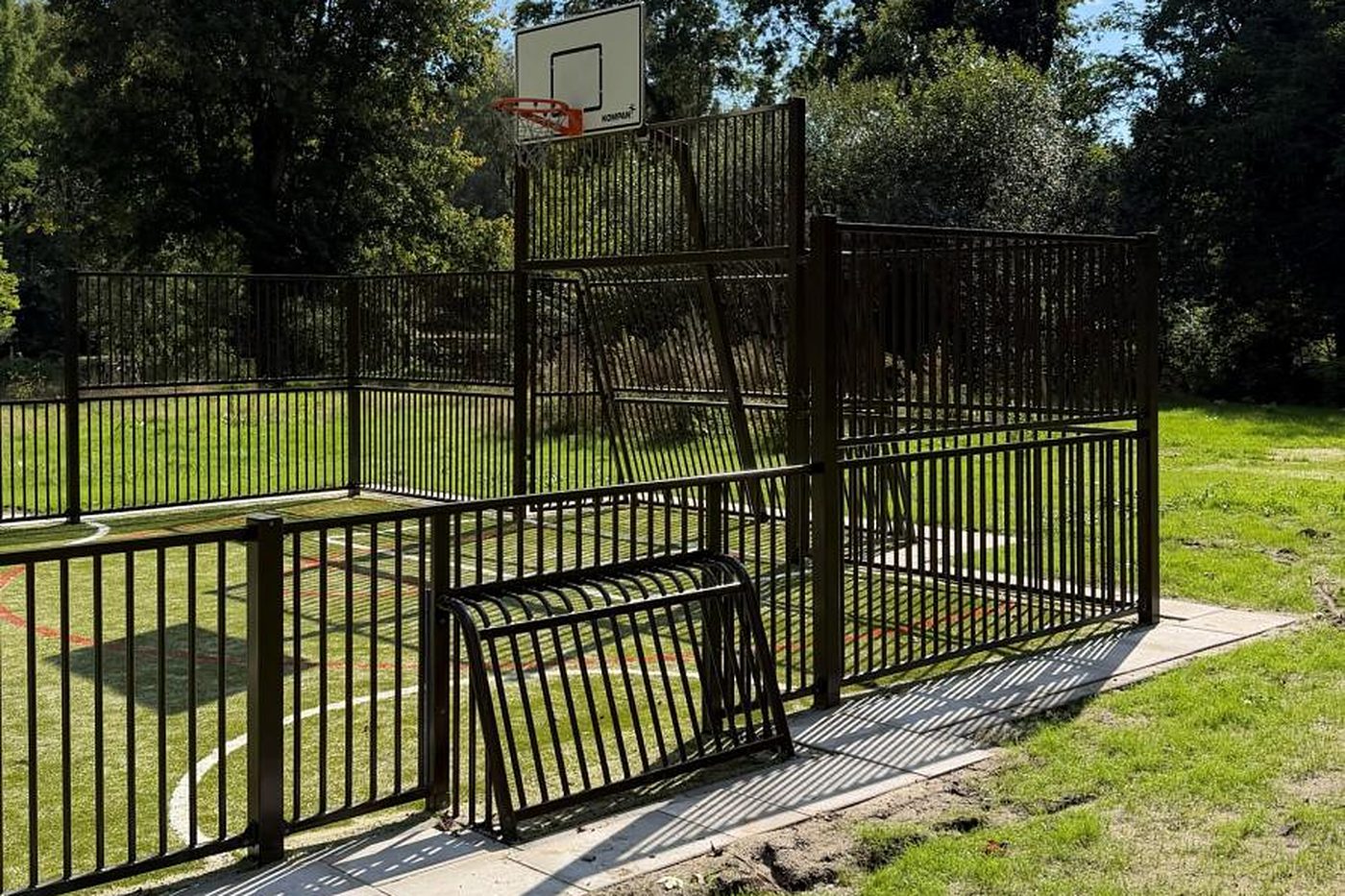
A new football court
Would the owner be happy with this? That is the question we ask ourselves about every product we come across. In this series we put the coating of a wide range of products, objects and structures under the microscope. This time: a new football court in Quirijnstok city park in Tilburg, which was installed a few weeks ago.
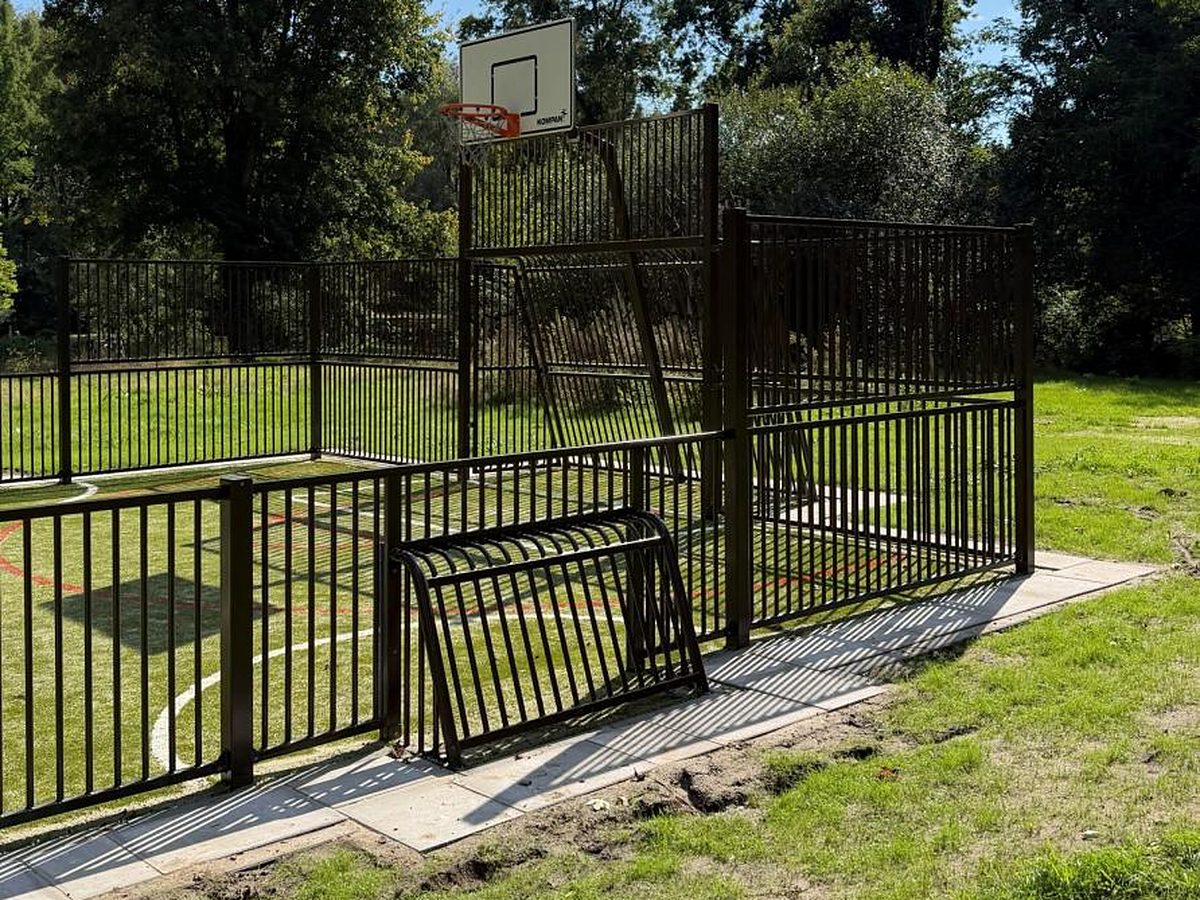
From a distance: neat and new
The goals and the fencing are coated green, and from a distance the whole thing looks neat and new. Exactly what you would expect from an object that has only been in place for a few weeks.
On closer inspection: appearances can be deceptive
Naturally, we could not resist checking for deviations that might cause problems with this new object in the future. It soon became clear that appearances can be deceptive. We identified four points.
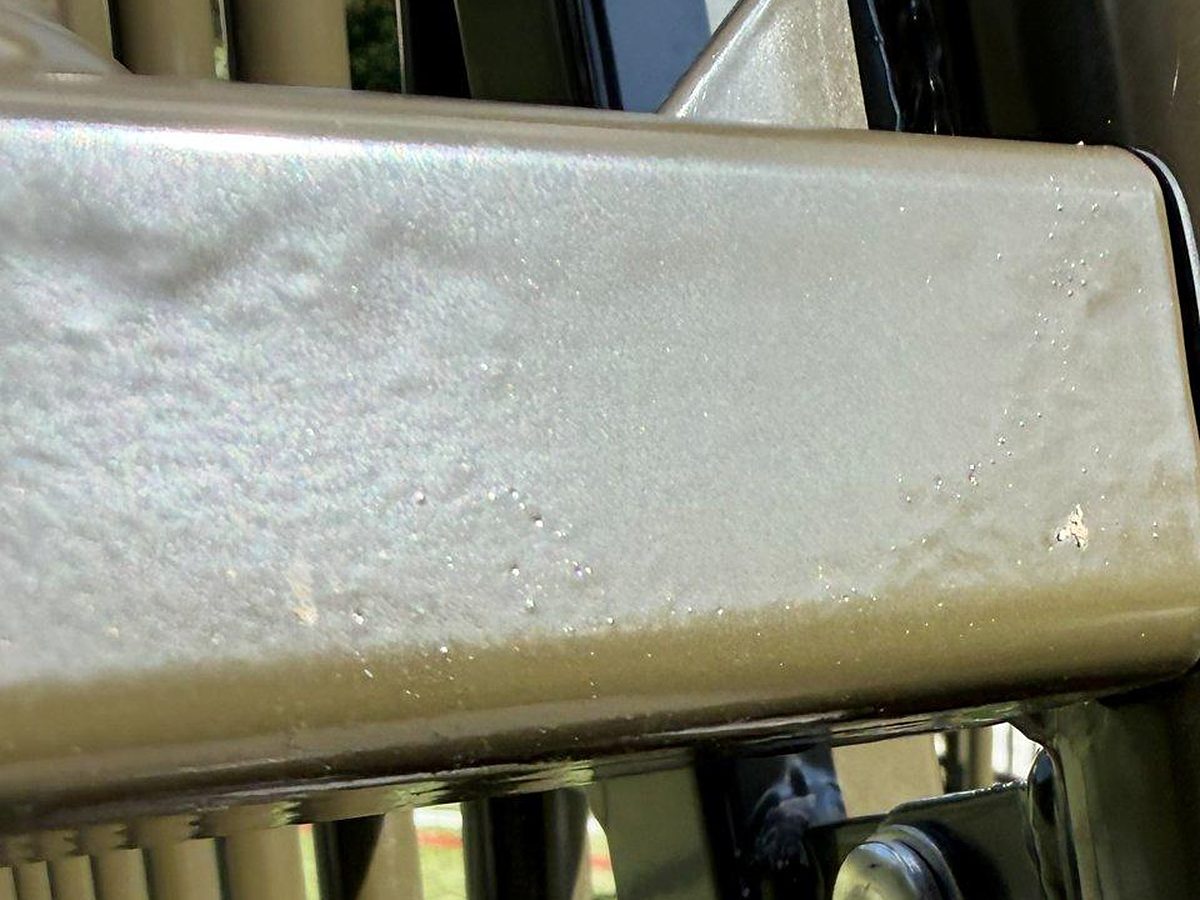
1. Pinholes in the coating
Observation: in a number of places there are pinholes in the coating: small craters. This is something we see more often.
Consequence: it is questionable whether this is visually acceptable.
Cause: pinholes are caused by outgassing of the zinc in the oven during the powder coating process (curing). This can be prevented with a well-tuned application process: the right coating thickness, the right oven temperature and a suitable coating.
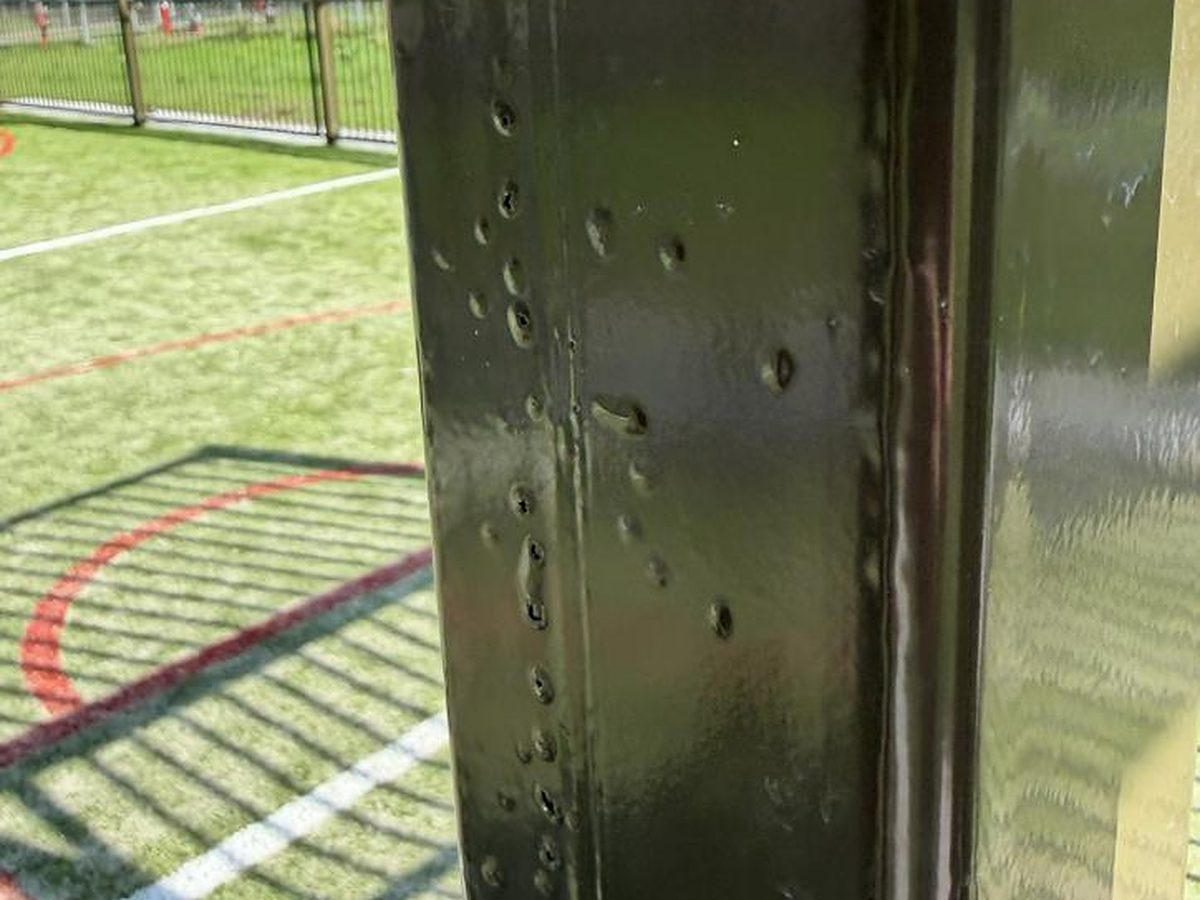
2. Zinc splashes on the steel tubes
Observation: there are thick, unsightly splashes on the steel tubes. We know these: they are zinc drips that have been coated over.
Consequence: not only unsightly, but also a safety risk, because the drips are sharp. In addition, the coating thickness on these drips is often low. If the pretreatment was not optimal, they can become a starting point for corrosion and flaking.
Cause: the zinc drips were not removed, but coated along with the rest.
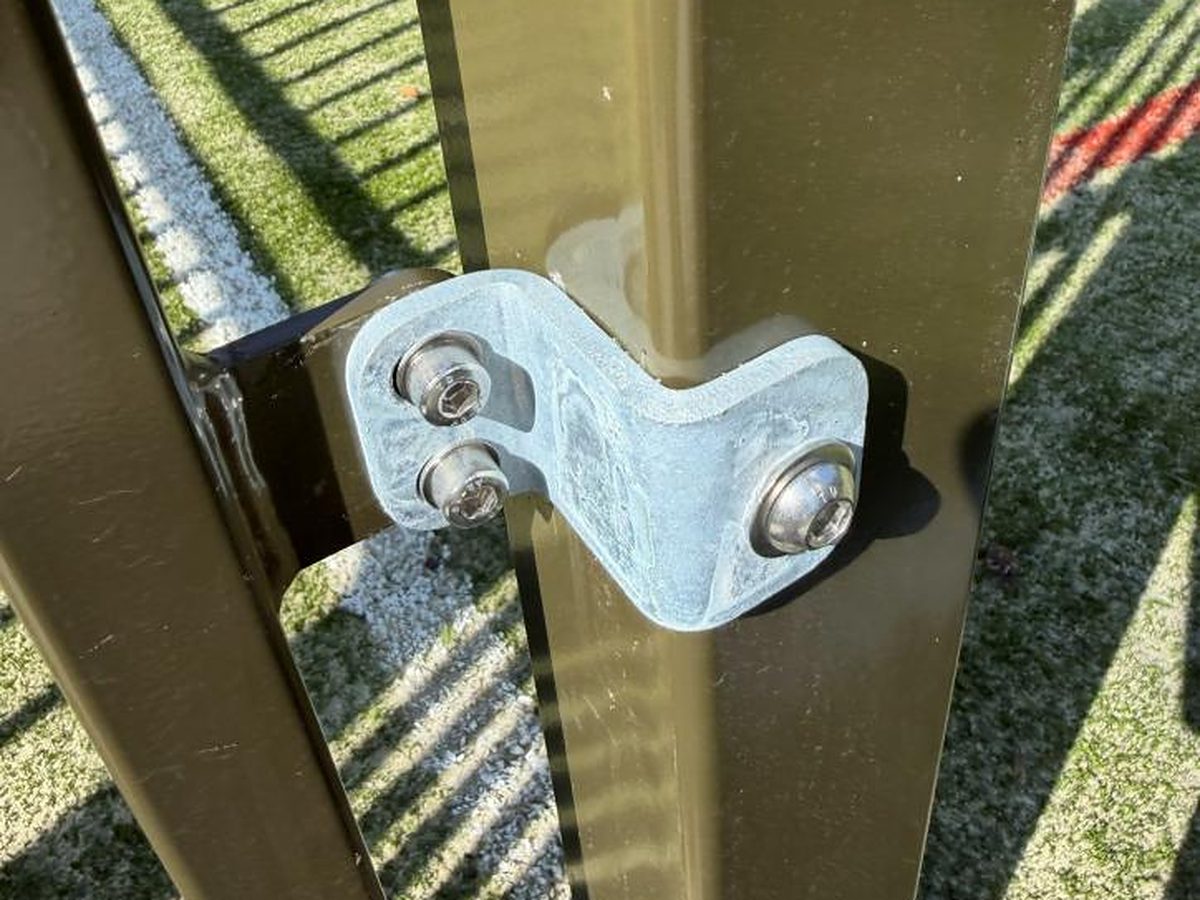
3. Brackets: galvanised only
Observation: to join sections of the coated fencing together, galvanised brackets without powder coating were used.
Consequence: these brackets are logically much less well protected against corrosion than the rest of the structure, which is both galvanised and powder coated. There is a good chance that they will start to rust in the foreseeable future.
4. Stainless steel bolts
Observation: the brackets are fixed with stainless steel bolts, recognisable by the A2 marking on the head.
Consequence: the galvanised brackets will rust faster.
Cause: the combination of stainless steel on galvanised steel causes galvanic corrosion.
Who pays for that?
Whoever bought this court sees a nice new football pitch at first glance. Even so, it is debatable whether the pinholes and zinc splashes are visually acceptable. Moreover, there is a good chance that the galvanised brackets will start to rust in the foreseeable future. And who pays for the repairs then?
We often see discussions like these, usually because no clear agreements were made about the expectations between client and contractor. What is more, the discussion often only starts after years, because that is when coating defects become apparent.
How could this have been prevented?
By clearly setting out beforehand what you expect from the coating, and verifying that those expectations are met. When purchasing structures like this, that means going through the following steps.
- Specify. Set out in a paint specification what the coating has to meet: environment, expected service life, adhesion and corrosion protection. But also the appearance, and how parts such as brackets and fasteners must be protected.
- Test. Determine which influences the product will be exposed to (in this case outdoors in a city park, with galvanised brackets in contact with stainless steel bolts) and, on that basis, decide which tests are needed to assess the quality.
- Verify. Test beforehand on the actual component and the actual substrate, and check on delivery whether the finish meets the agreements. In this case a corrosion test to ISO 9227 on the joint between bracket and stainless steel bolt could have revealed the risk to the galvanised-only brackets in advance.
That is how you avoid discussions about quality and cost afterwards.
The art of specifying
Coatings largely determine the ultimate service life of a product. Do you actually know what you expect from the coating of your product? And is that clear to your supplier as well?
We help companies to clarify these expectations, record them professionally and verify that they are met.


