


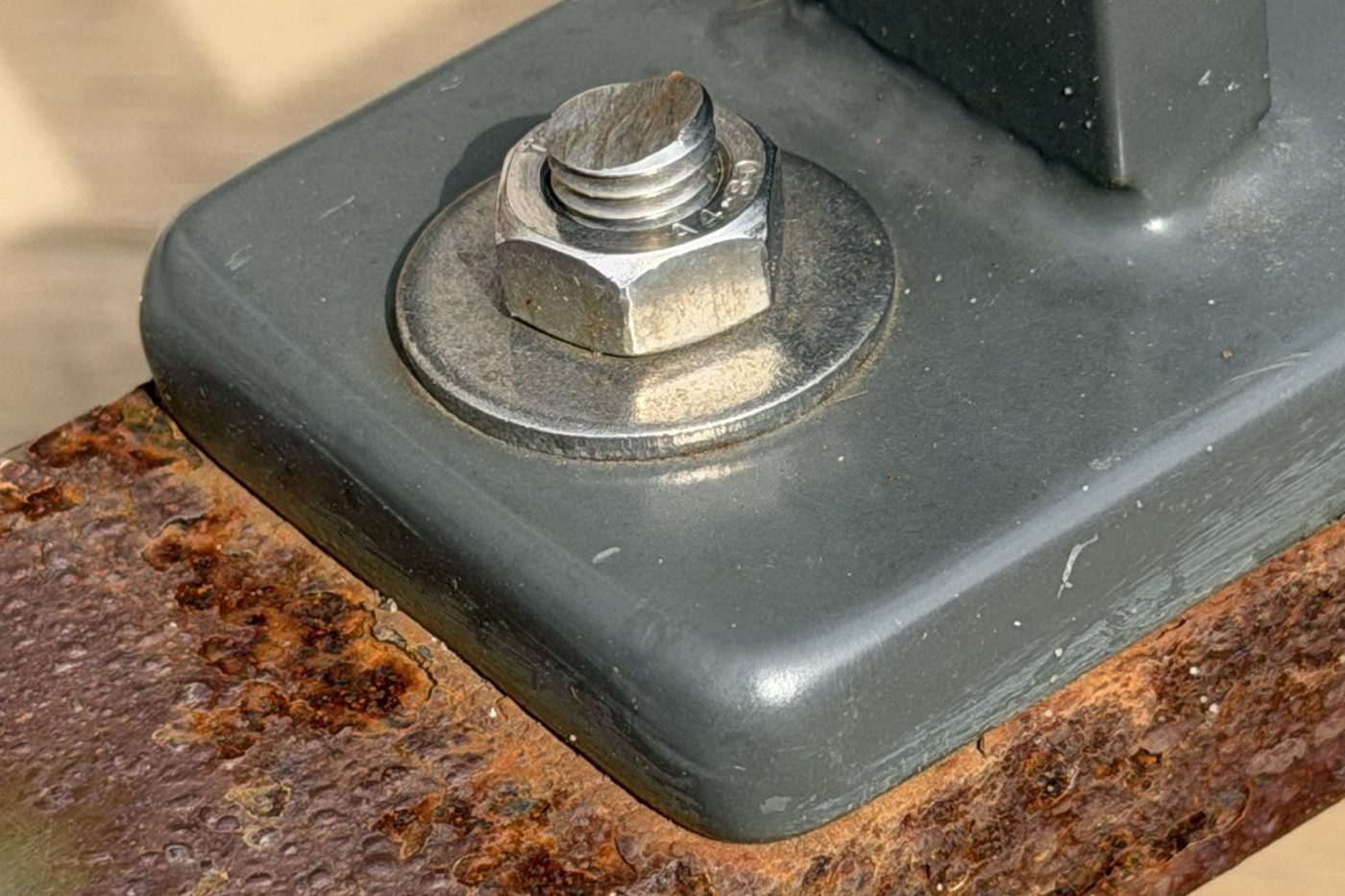
Danger from an unexpected quarter
Would the owner be happy with this? That is the question we ask ourselves about every product we come across. This time: the fence around the terrace of a hotel in Domburg.
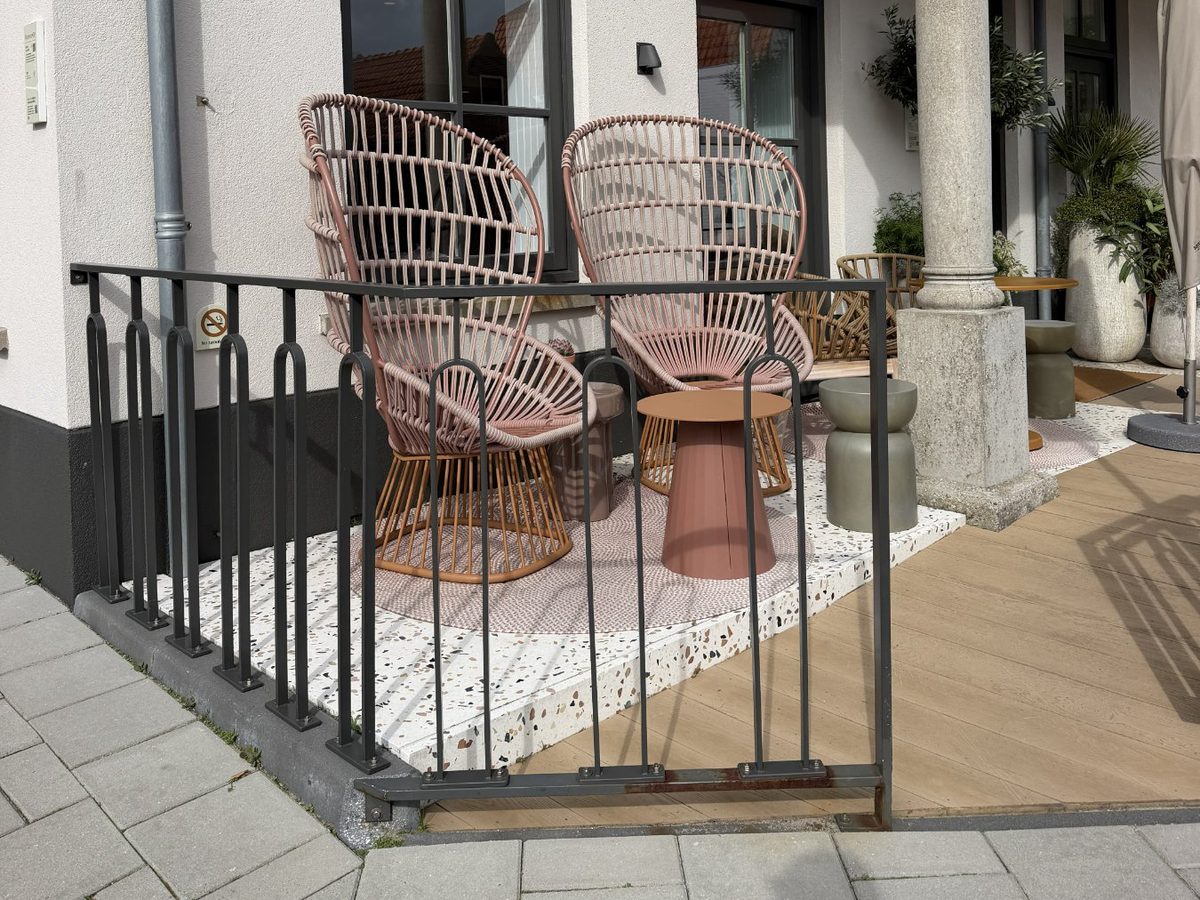
From a distance: immaculate paintwork, rust at the bottom
The fence is part of the terrace of a hotel that was completely renovated a few years ago. At first glance the coating still looks immaculate.
Even so, it is immediately noticeable that there is severe local rust formation at the bottom — on exactly the section closest to the ground.
On closer inspection: two defects
Up close it is clear that the bottom of the fence is being eaten away completely by corrosion. We identified two defects.
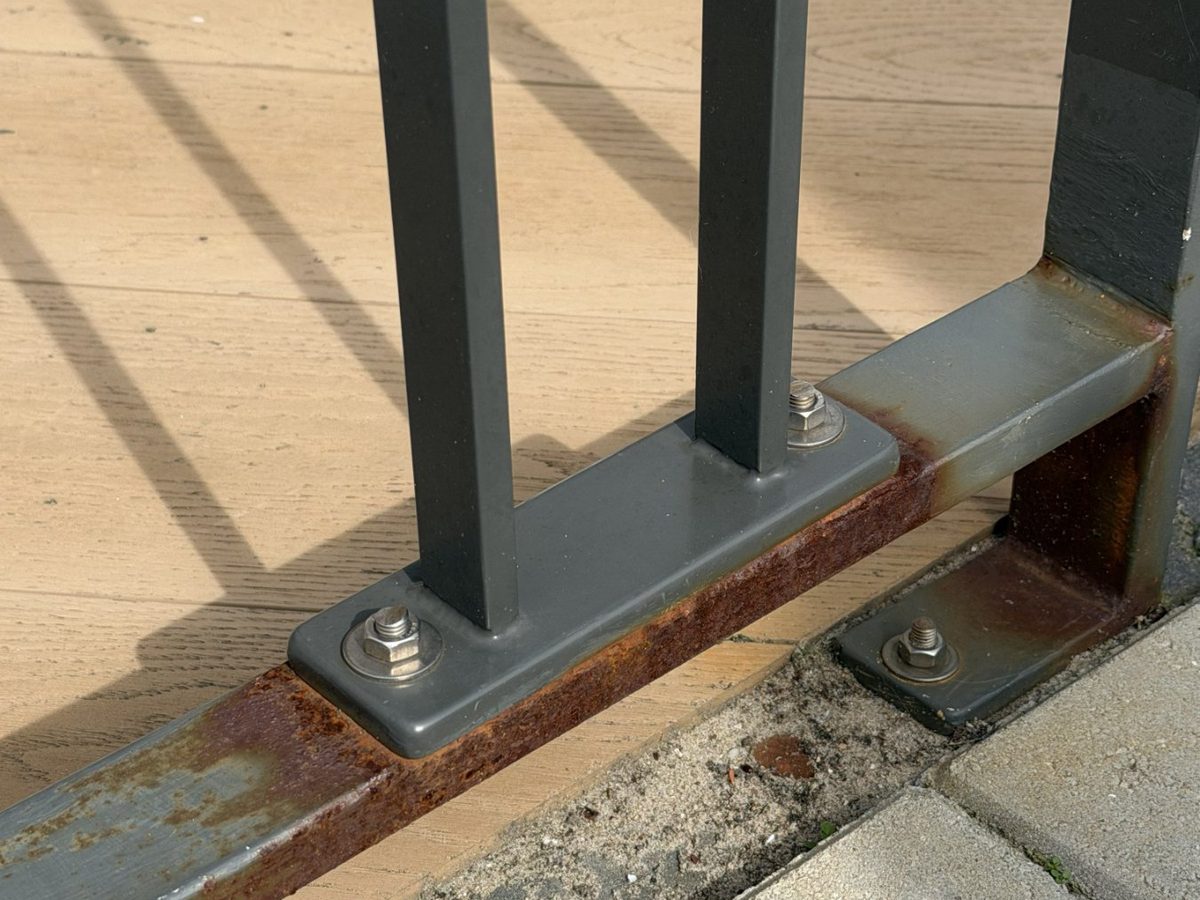
1. Rust formation (functional)
Observation: severe rust formation is taking place at the bottom of the fence, at the contact surfaces. Strikingly, the rust is only present on the lower section, and not on the section mounted on top of it.
Consequence: after this short period of use the rust formation is already so severe that there is a high risk of the structural strength being compromised in the near future.
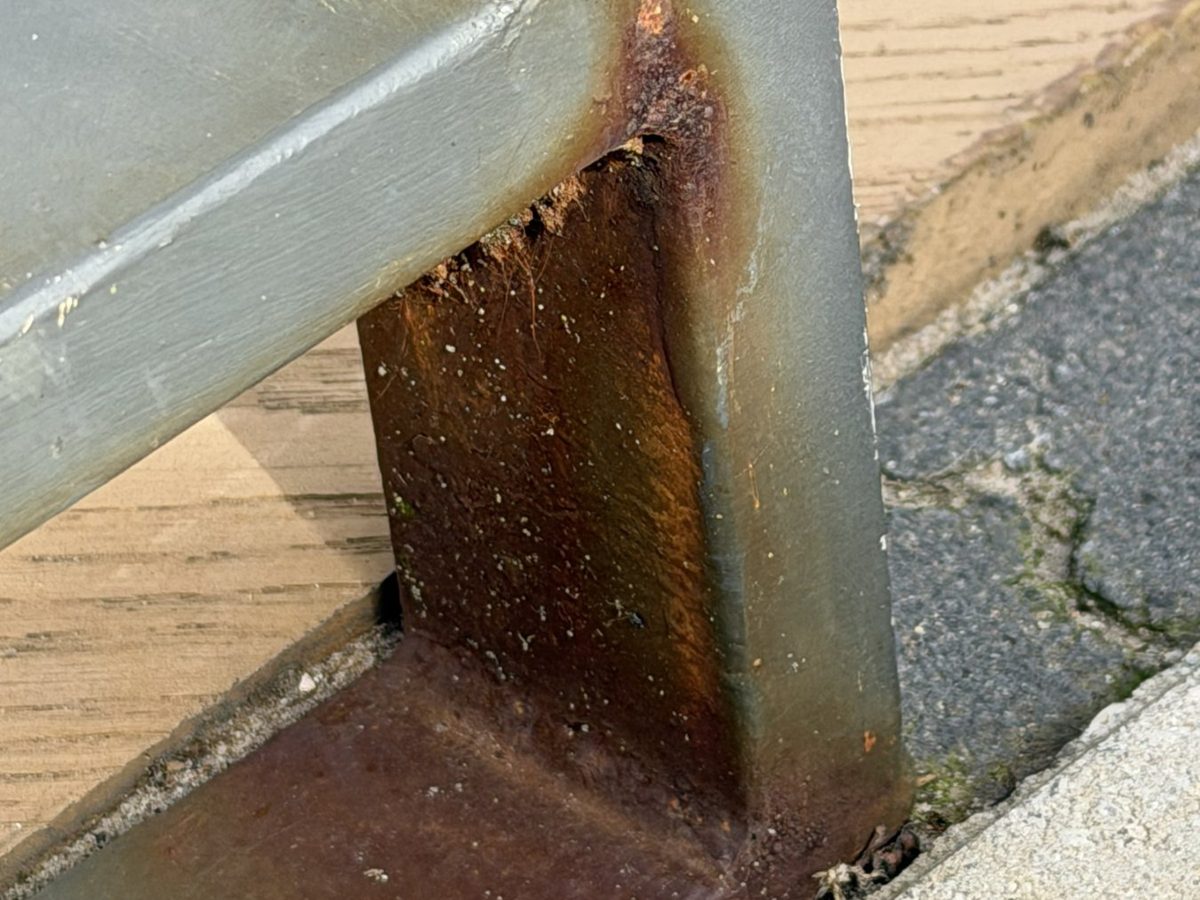
2. Rust formation (aesthetic)
Observation: the rust formation has affected the appearance of the fence to an unacceptable degree. Moreover, rust water drips onto the terrace below, causing stains that are very difficult to remove.
Consequence: the fence will have to be replaced, or completely stripped and recoated.
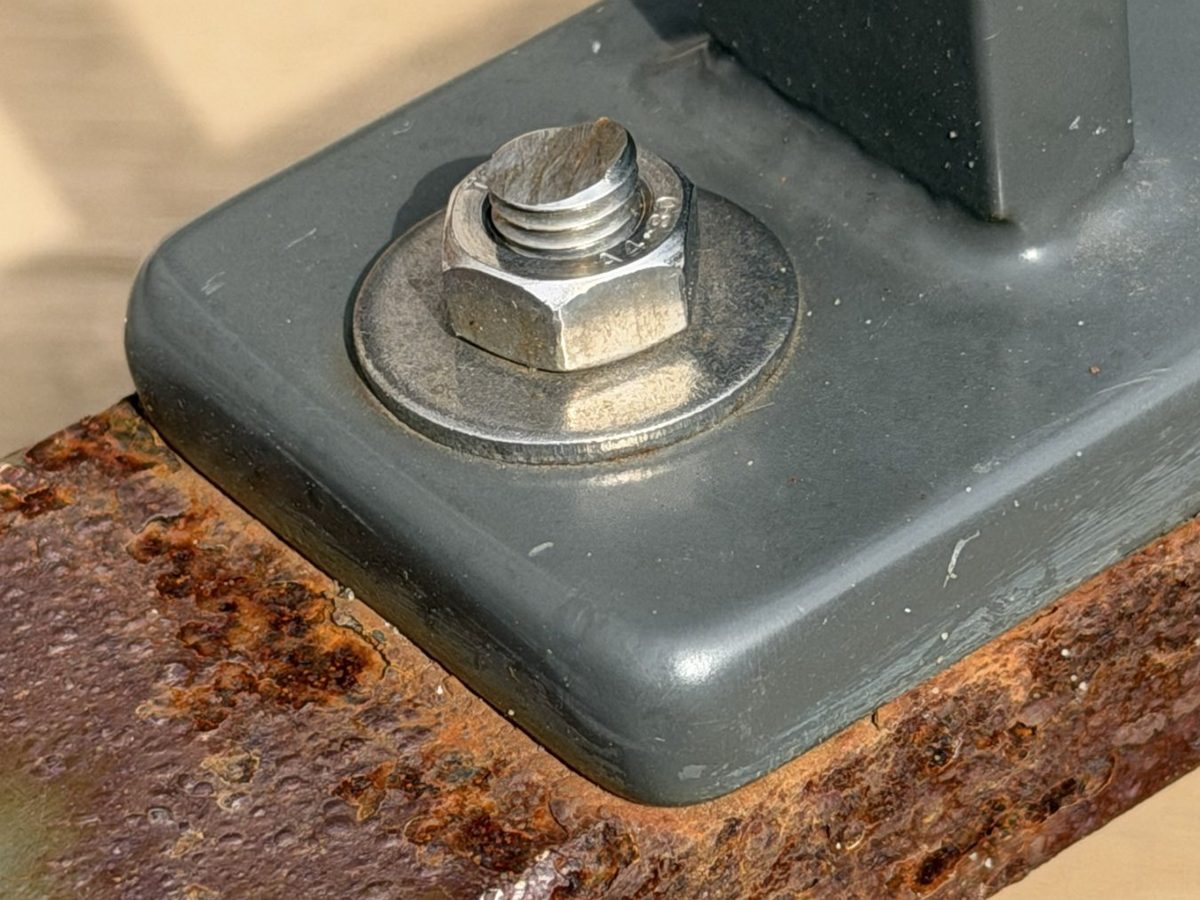
Why is this fence rusting in exactly this spot?
It strongly appears that the tubes of the bottom rail were coated differently (thinner), locally repaired and/or not galvanised.
This section is probably also a regular target for Domburg’s loyal four-legged residents. Through capillary action, urine is drawn into the gap between base plate and tube and stays there for a long time, where it does its corrosive work. Finally, the use of stainless steel bolts on steel also accelerates corrosion.
So who pays for that?
This degree of rust formation should not occur after such a short period of use. In our opinion, the hotel owner is entitled to hold the supplier to account and ask for repairs.
Discussions like these often only start after years, at the moment coating defects become visible. And usually without clear agreements made beforehand.
How could this have been prevented?
For a small-scale project like this, extensive specification and inspection may be overkill. But as soon as the quantities increase, and with them the risk of failure, these steps belong in the process:
- Specify. Set out in a paint specification what the coating has to meet: environment, expected service life, adhesion and corrosion protection.
- Test. Determine which influences the product will be exposed to — here a marine climate, with the risk of exposure to urine — and decide on that basis which tests are needed.
- Verify. Test beforehand on the actual component and the actual substrate. A corrosion test to ISO 9227 would have revealed this defect at an early stage.
That is how you avoid discussions about quality and cost afterwards.
The art of specifying
What does your purchasing specification say about the coating? Coatings largely determine the service life of a product. The question is whether that is as clear to your supplier as it is to you — and whether it is written down anywhere.


