


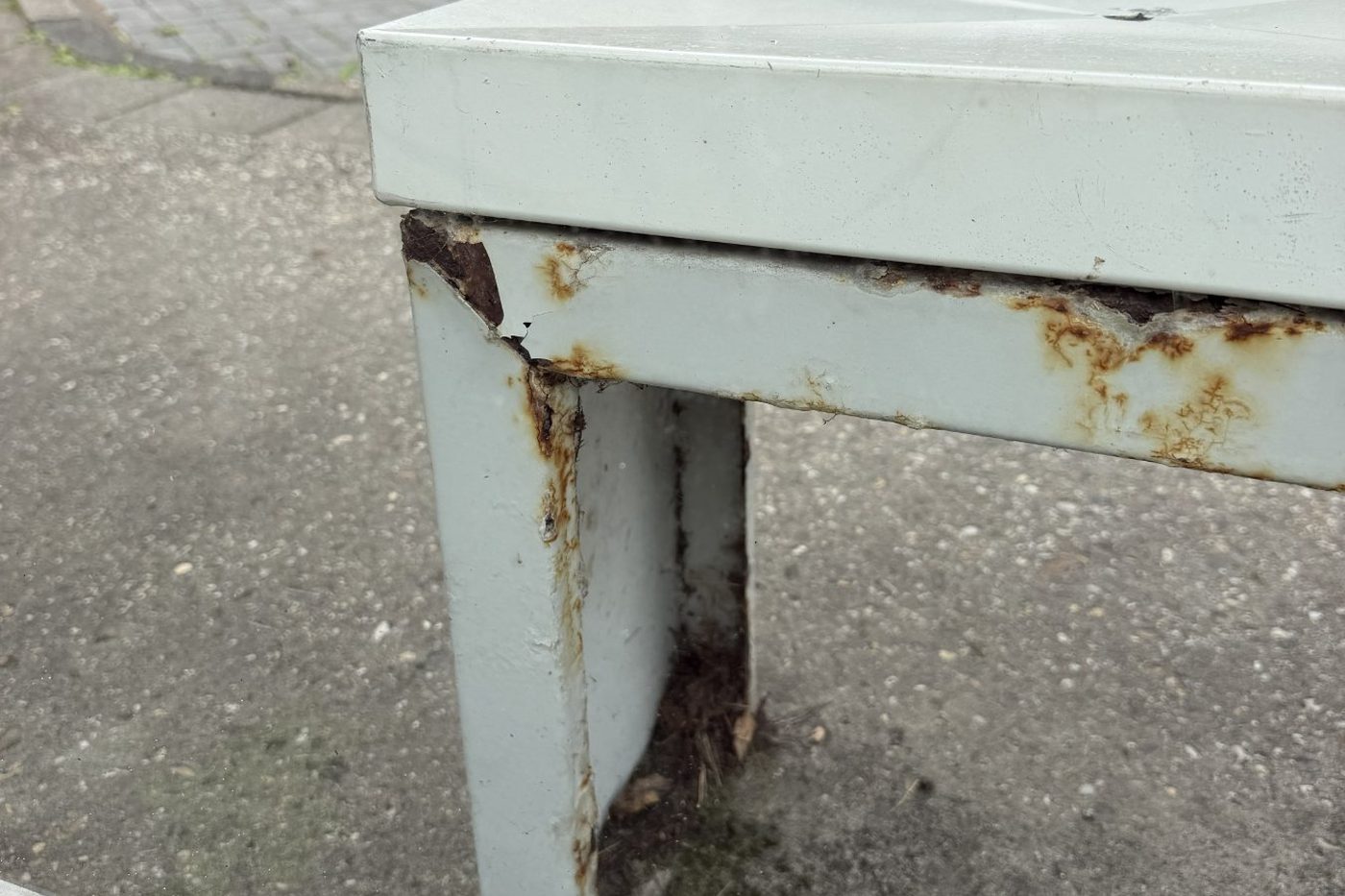
Waiting for the bus, and for rust
Would the owner be happy with this? That is the question we ask ourselves about every product we come across. In this series we put the coating of a wide range of products, objects and structures under the microscope. This time: a bus shelter in Domburg, and above all the bench inside it. A good example of how design and finish can determine service life.
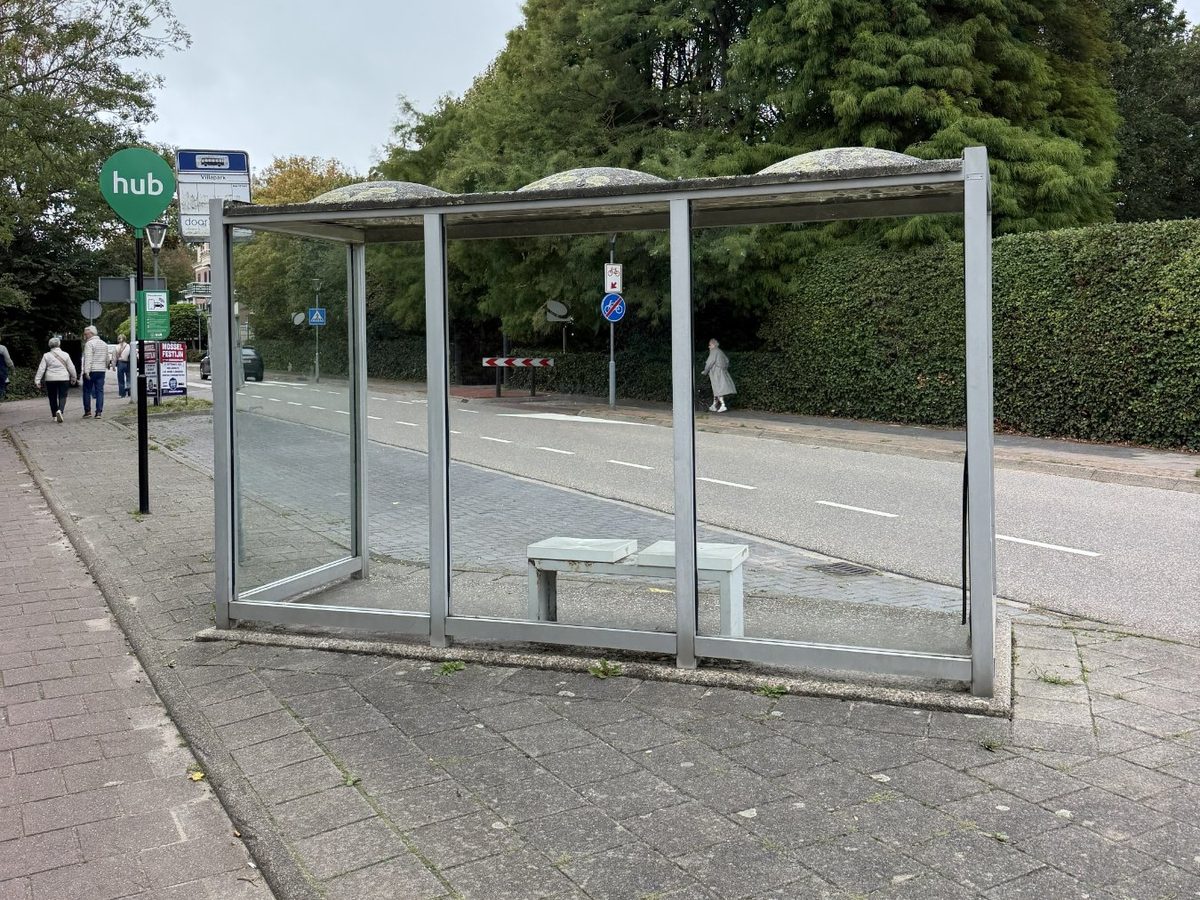
From a distance: not much wrong
This bus stop in Domburg has been here for years and at first glance still looks fine. The shelter is made of aluminium, the bench inside it of coated steel.
On closer inspection: the bench is in poor shape
Up close, it is mainly the bench that has suffered, especially on the underside. We looked at three points: one is in order, two are defective.
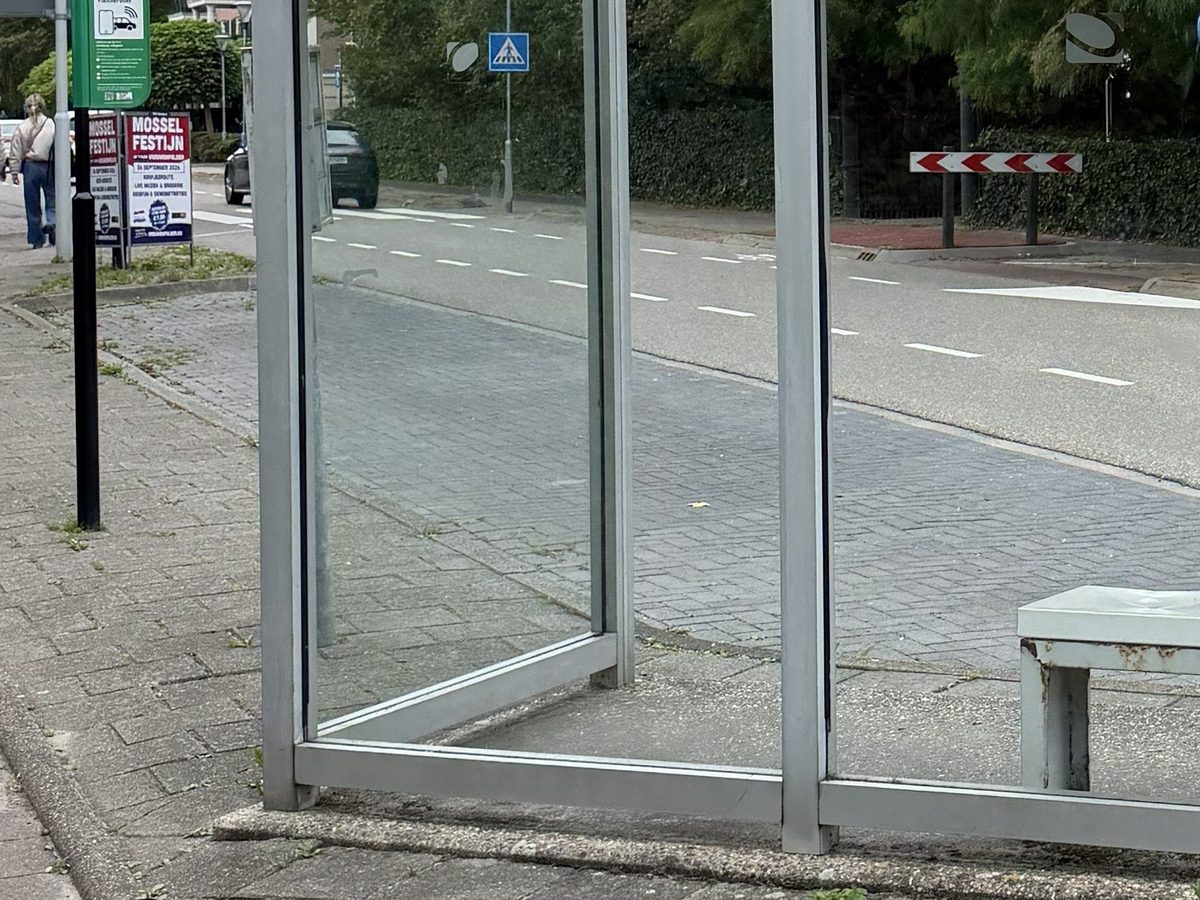
1. In order: the shelter itself is in excellent condition
Observation: the shelter is made of aluminium with a powder coating finish. The coating still looks fine and is still firmly adhered.
The question: how can this shelter still look so good while the bench is rusting so badly?
The answer: the shelter and the bench are made of different materials and were treated in completely different ways. Especially when the right alloy is used, aluminium responds very well to pretreatment and, with a single layer of powder coating, withstands harsh conditions for a long time. As this is extruded aluminium, it is important that the pretreatment includes a pickling step that etches away the top layer of the aluminium before the conversion coating is applied.
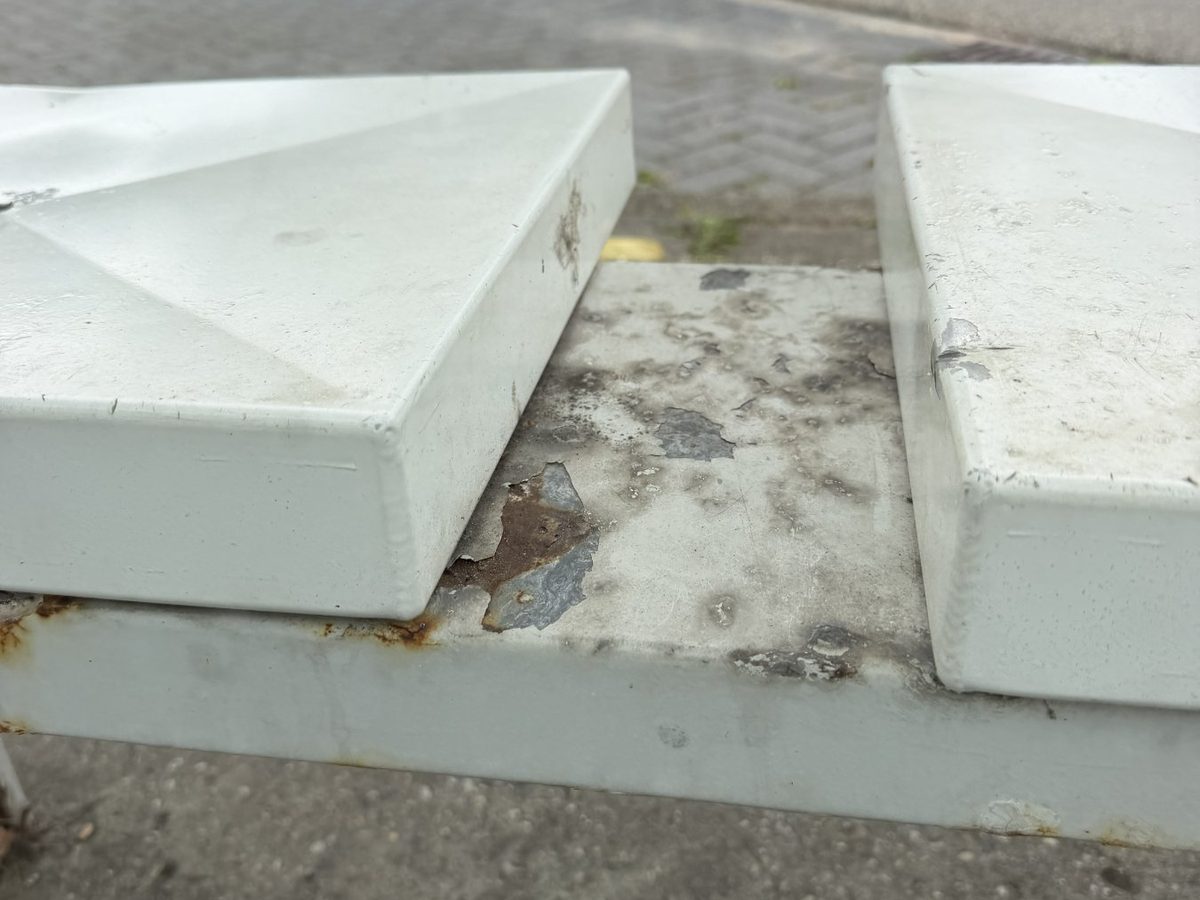
2. Defect: flaking coating on the top of the bench
Observation: the coating on the top of the bench, on the frame between the two seats, is coming loose. The grey surface underneath points to (Sendzimir) galvanised steel. The zinc prevents red rust from forming straight away.
Consequence: apart from the fact that the flaking coating looks unsightly, red rust will form once the zinc is “used up”. The strength of the structure will then be at risk.
Cause: the design allows (salt) water to collect. After a while it evaporates and the salts are left behind. When moisture returns, this creates a highly corrosive environment, which coated Sendzimir galvanised steel cannot withstand. The seat itself, incidentally, has a small hole that lets water drain away. There you see no problems.
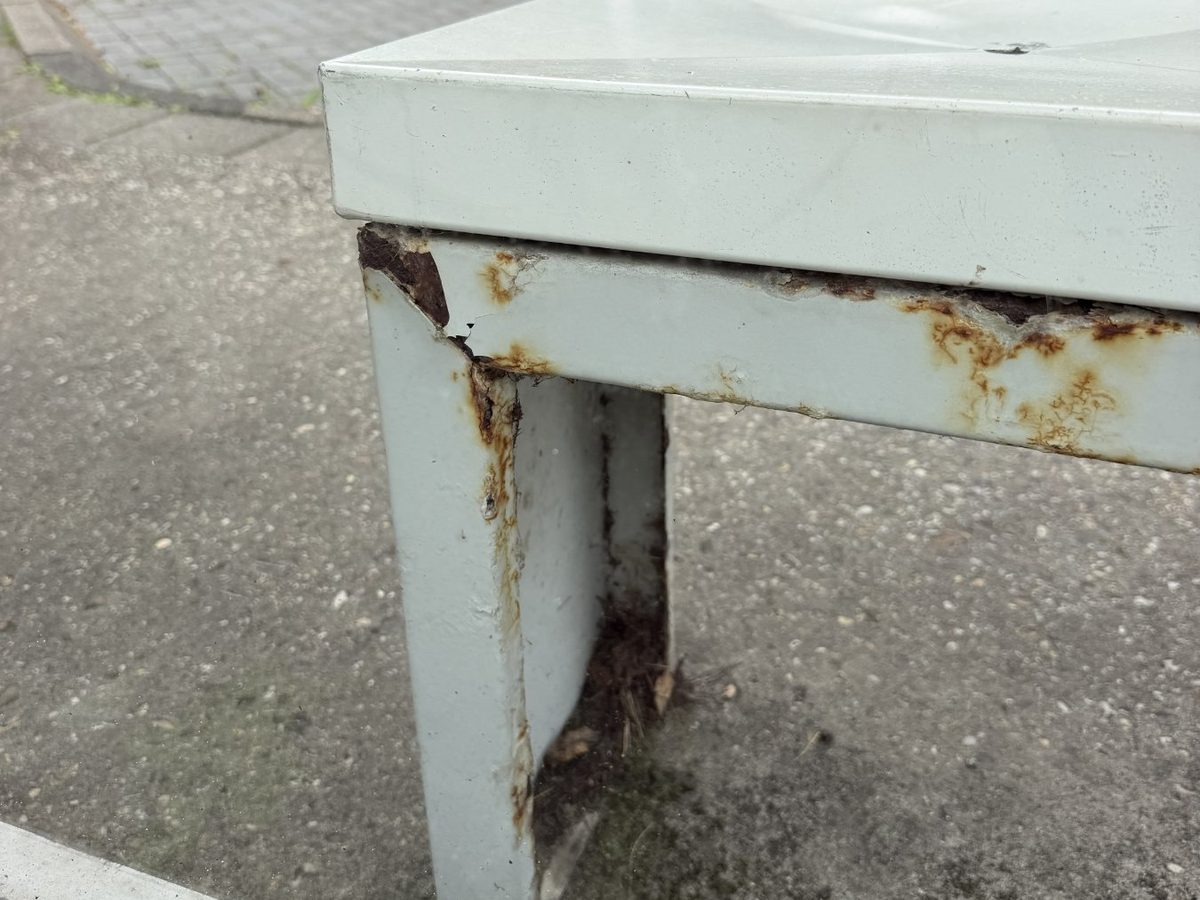
3. Defect: corrosion and flaking at the edges
Observation: flaking paint, rust and blistering are visible in several places. These defects always start at the edges. The coating is also flaking off the underside of the seat itself.
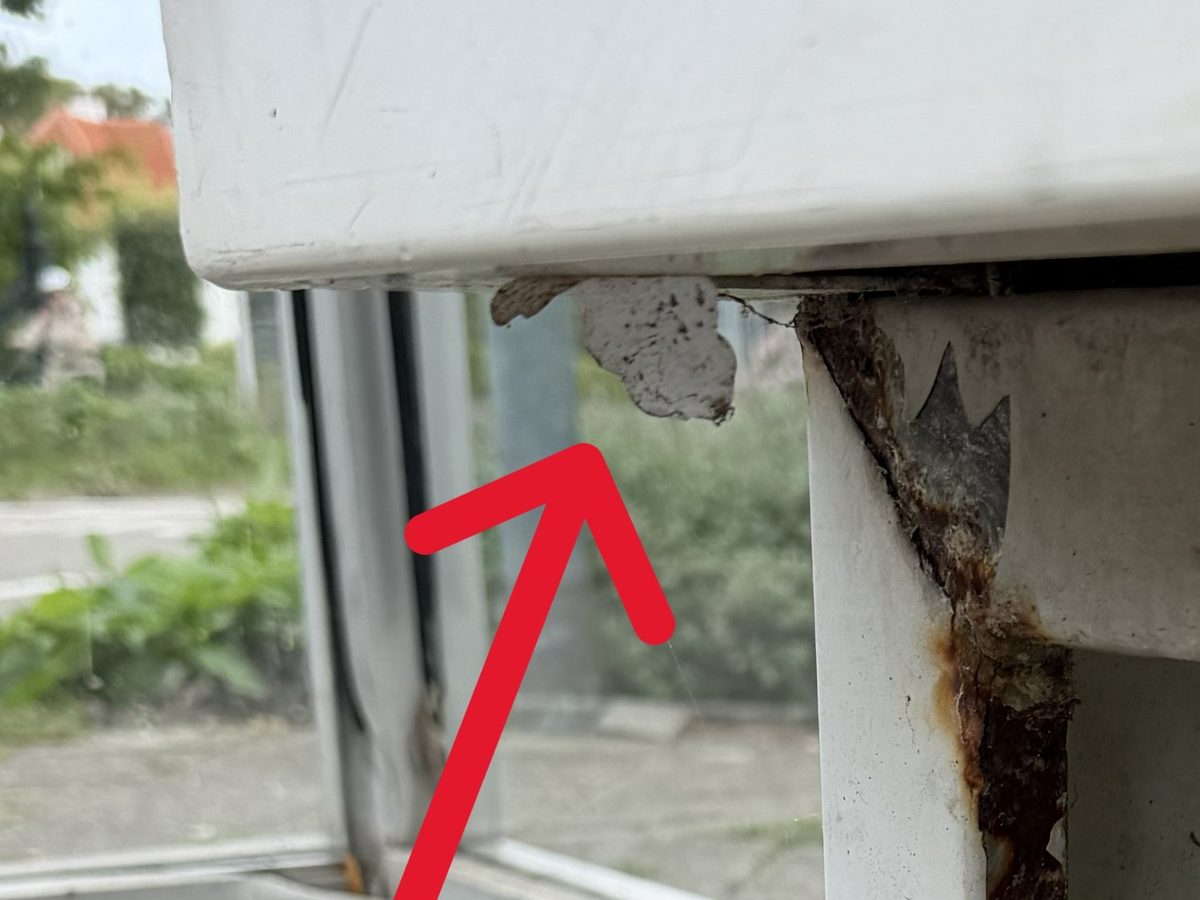
Why at the edges?
Cause (probable): coating coverage on sharp edges is always lower. The sharper the edge, the thinner the coating at that point. The underside of the seat itself also has sharp edges. That is where the coating is coming loose, while the seating surface still looks fine.
Who pays for that?
This type of bus shelter has not been installed since 2010, so this one is at least 15 years old.
Even so, it is a pity that more attention was not paid to the design. Some of the problems could have been prevented at no extra cost. Wouldn’t it be great if a few small modifications allowed this shelter to last another ten years?
How could this have been prevented?
Corrosion protection starts at the drawing board. Had drainage and better rounding of the edges been taken into account in the design, the coating would have been in considerably better condition. In addition, the following steps help.
- Specify. Set out in a paint specification what the coating has to meet, such as environment, expected service life, adhesion and corrosion protection, and share it with your supplier.
- Test. Verify your requirements by carrying out the tests listed in the paint specification. In this case a salt spray test to ISO 9227, or better still a cyclic corrosion test, would have brought the problem to light straight away.
- Verify. Carry out these tests on the actual product (or part of it), not on test panels. Only then can you see whether the system performs as you expect.
That is how you avoid discussions about quality and cost afterwards.
The art of specifying
What does your purchasing specification say about the coating? Coatings largely determine the service life of a product. Is that as clear to your supplier as it is to you?
We help companies to clarify these expectations, record them professionally and verify that they are met.


