


One truck, two coating stories
Would the owner be happy with this? That is the question we ask ourselves about every product we come across. In this series we put the coating of a wide range of products, objects and structures under the microscope. This time: the pallet box under a truck. A good example of how special applications place special demands on a coating.
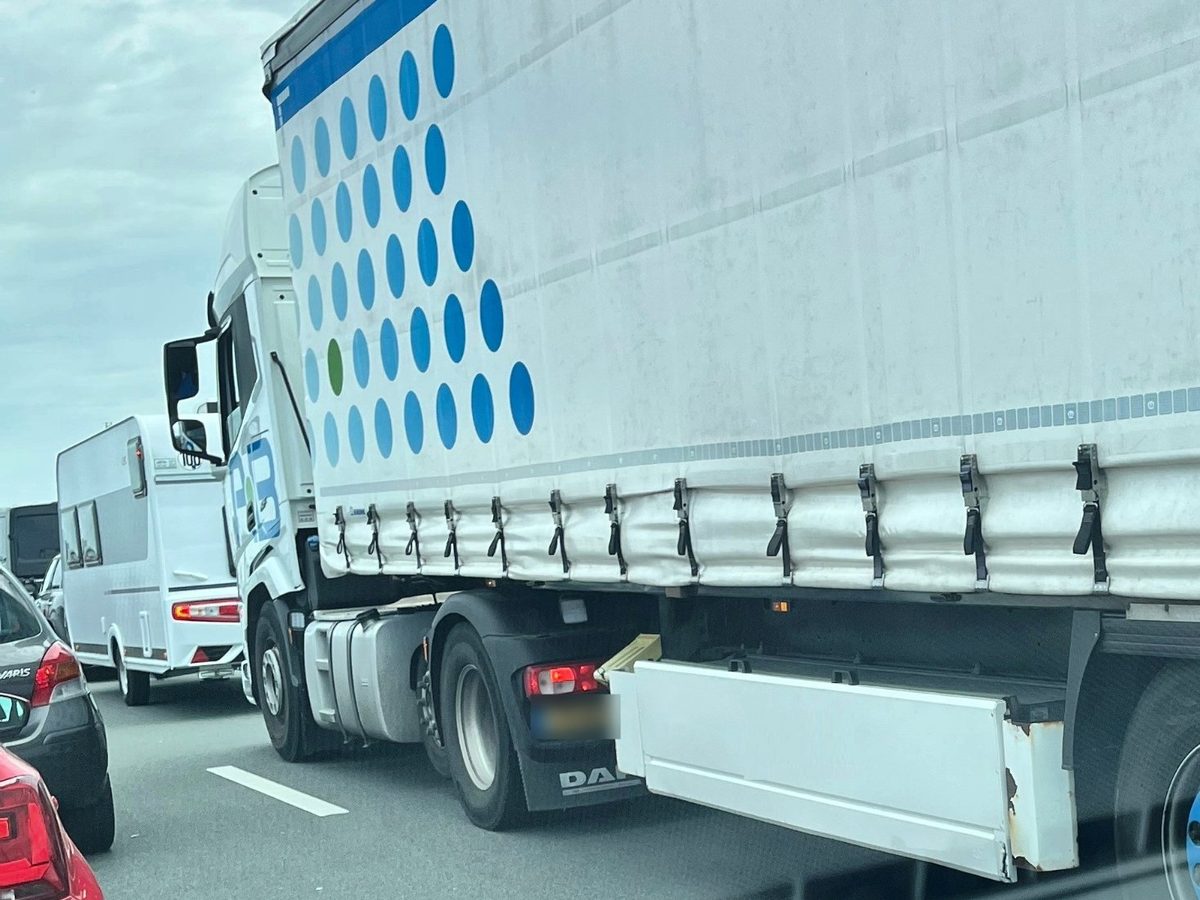
From a distance: rust at the rear
Pallet boxes under trucks take a real beating, both mechanically and from the environment. With this truck, too, it is noticeable even from a distance that there is rust at the rear of the pallet box.
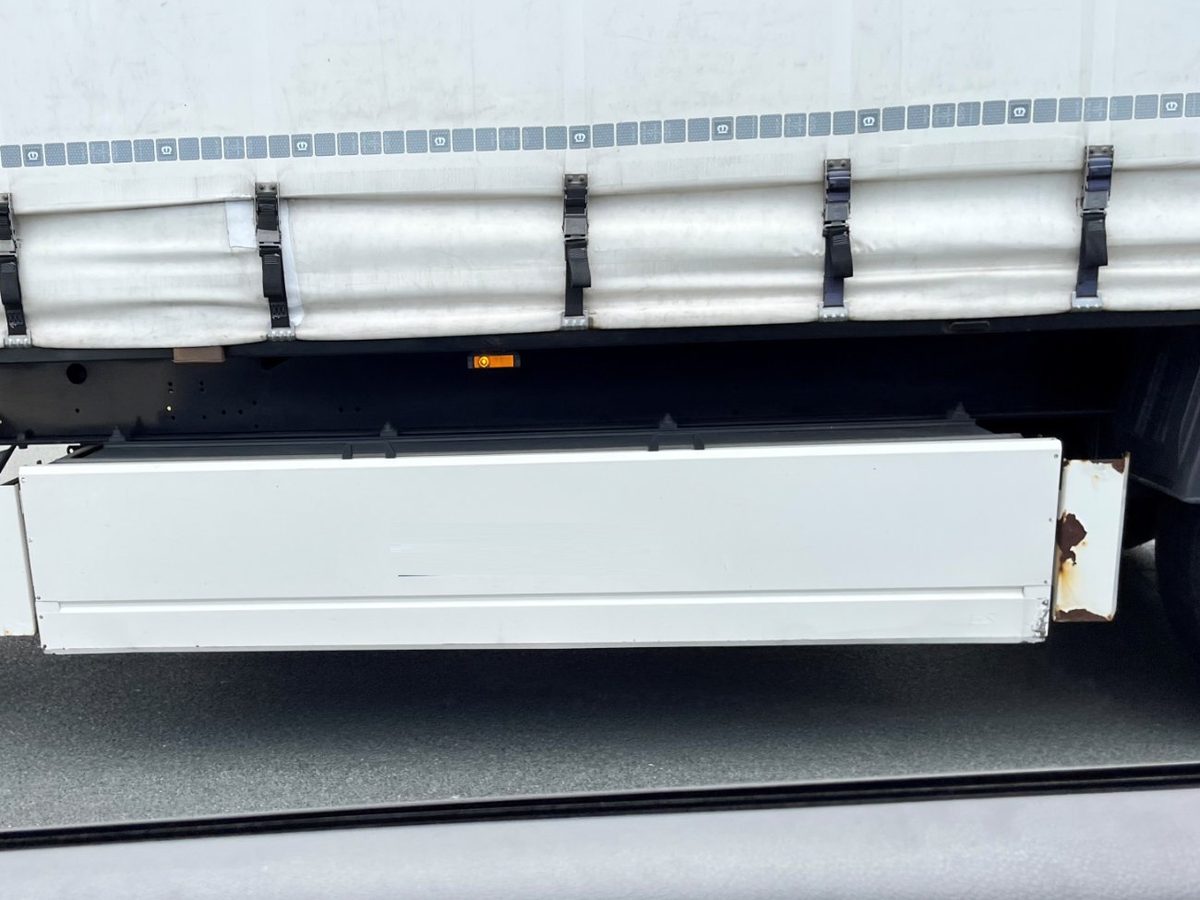
On closer inspection: a big difference between the two parts
The large part, the pallet box itself, is still in good condition apart from one area of damage. The rear section, on the other hand, has rusted almost completely. We took a closer look at both parts.
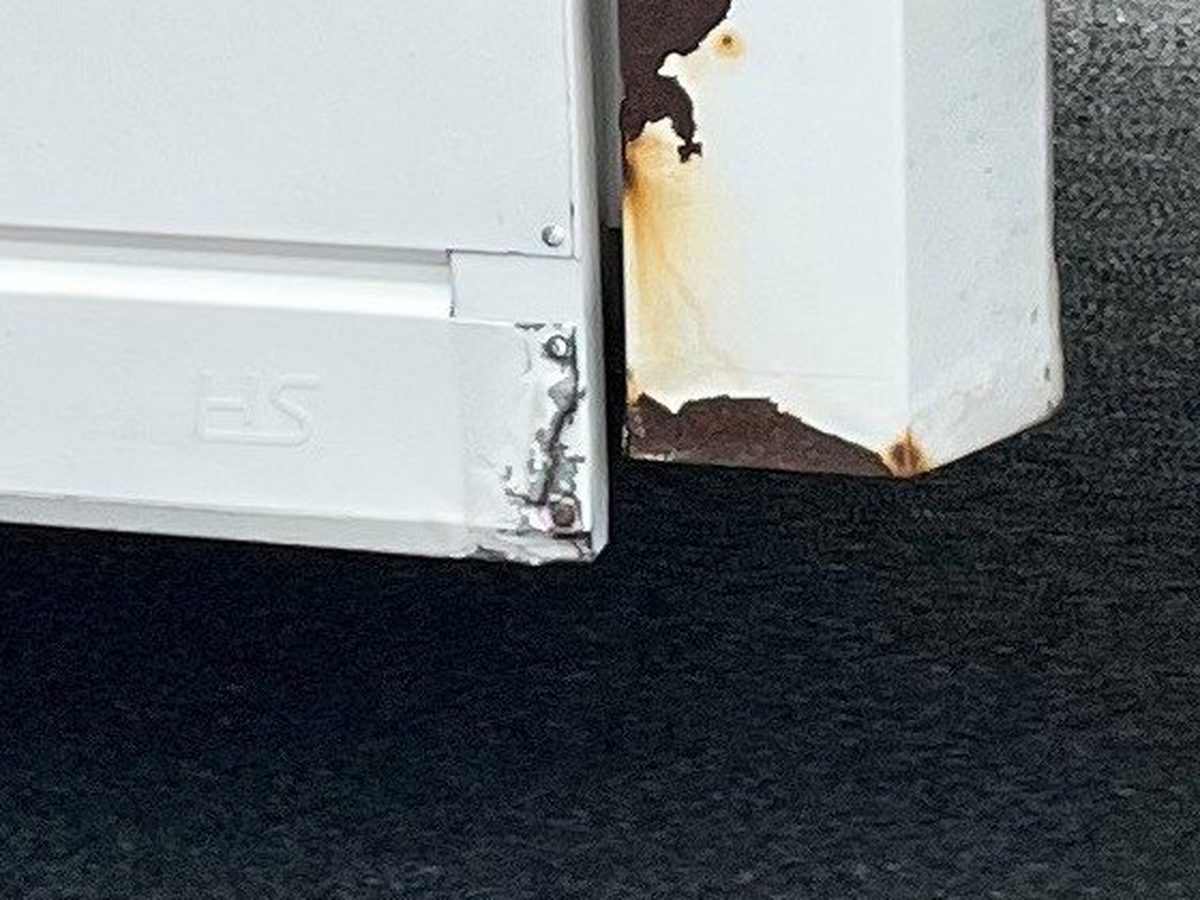
1. Pallet box itself: no defects (in order)
Observation: the coating of the pallet box itself is in good condition. There are no visible signs of corrosion or other defects. There is, however, mechanical damage on the bottom right-hand side, where something has probably hit the box. Although the steel has torn there, there is no corrosion.
Consequence: of course we do not know how long the damage has been there, but so far the coating around the scratch is not flaking off.
Cause: this suggests that the pretreatment was probably carried out properly. The zinc under the coating is preventing red rust from forming (for the time being).
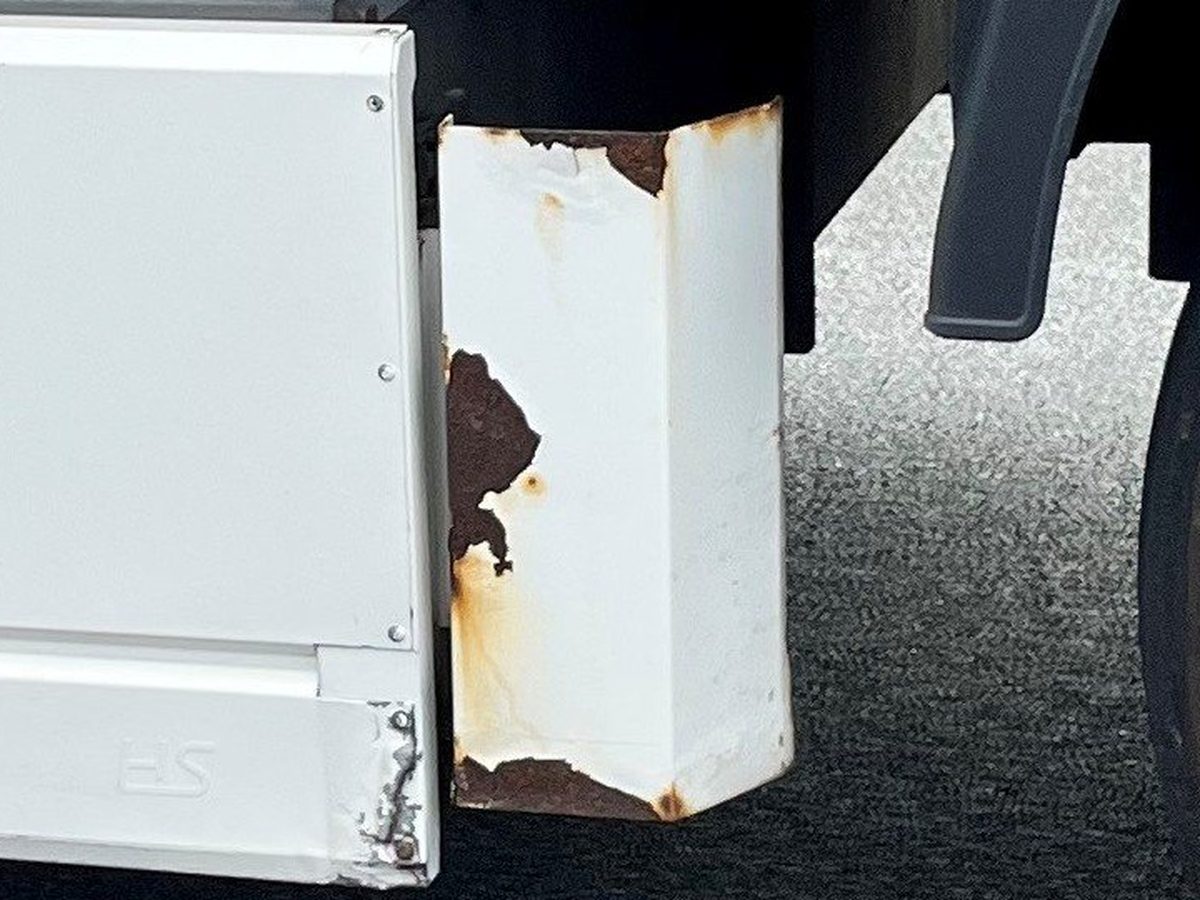
2. Rear section: severe rust formation and flaking (defect)
Observation: behind the pallet box there is a support or bracket that, by contrast, has been severely attacked by corrosion.
Consequence: the coating is coming loose and red rust is visible directly underneath. As a result, the rear section has rusted almost completely.
Cause: red rust is visible straight away, so no galvanised steel was used. The corrosion starts at the edges, which points to edges that were not properly rounded. The fact that the rust is spreading so extensively under the coating probably indicates poor pretreatment and/or the absence of a primer.
Why was this part treated differently from the pallet box itself?
The support is probably a bought-in part, and the requirements for the coating were not clearly communicated. That is how one and the same truck tells two very different coating stories.
Who pays for that?
Many owners of these trucks will not accept this and will ask for repairs. That can turn into an enormous expense. But who is to blame? The truck body builder, or the supplier of the part?
That depends on what was agreed. Is there a clear paint specification, and does it say anything about this specific defect? Discussions like these often only start after years, at the moment coating defects become visible.
How could this have been prevented?
With clear agreements beforehand, and a test that confirms them. So when purchasing structures like this, and the parts that go with them, go through the following steps.
- Specify. Set out in a paint specification what the coating has to meet: environment, expected service life, adhesion and corrosion protection. And share that specification with your supplier.
- Test. Determine which loads the product will be exposed to (in this case the mechanical and environmental loads under a truck) and set out in the paint specification which tests will be used to assess the quality.
- Verify. Check your requirements by actually carrying out those tests, on the product itself or a part of it, not on test panels. Only then can you see whether the system performs as you expect. In this case a salt spray test to ISO 9227 and a stone chip test would have exposed the problem straight away.
That is how you avoid discussions about quality and cost afterwards.
The art of specifying
What does your purchasing specification say about the coating? Coatings largely determine the service life of a product. Is that as clear to your supplier as it is to you?
We help companies to clarify these expectations, record them professionally and verify that they are met.


